

All-Inclusive Holiday Cost Estimator
How Much Will You Really Spend?
Estimate your hidden costs before booking. The article reveals all-inclusive doesn't mean free!
Your Estimated Hidden Costs
Real cost warning: This estimate shows what travelers actually spend.
Total Extra Costs: $0.00
Based on your selections (7-day trip for 2 people)
Percentage of total package: 0.0%
Pro Tip: Most travelers spend 20-30% extra. Budget at least $150 per person!
When you see "all-inclusive" on a resort website, it sounds like magic: food, drinks, activities, maybe even Wi-Fi-all covered in one price. You pack your bags, imagine sipping margaritas by the pool with no bills to worry about, and feel like you’ve hit the jackpot. But here’s the truth: all-inclusive doesn’t mean you pay nothing. It means you paid upfront for a bundle-and that bundle has limits, exclusions, and sneaky extra charges waiting to surprise you.
What’s Actually Covered in an All-Inclusive Package?
At its core, an all-inclusive resort includes three main things: lodging, meals, and basic drinks. That means your room, breakfast, lunch, dinner, and snacks at the main restaurants are covered. Non-alcoholic drinks like soda, juice, and bottled water are usually included too. Some places throw in house-brand alcohol-think local rum, beer, or house wine. You can grab a cocktail at the pool bar without pulling out your wallet.
But not all resorts are the same. A budget all-inclusive in Mexico might only include one sit-down restaurant and a snack bar. A luxury resort in the Caribbean might have five restaurants, a 24-hour room service menu, and a wine list with 50 options. The difference? Price. And what’s included depends on how much you spent to get there.
The Hidden Costs Everyone Forgets
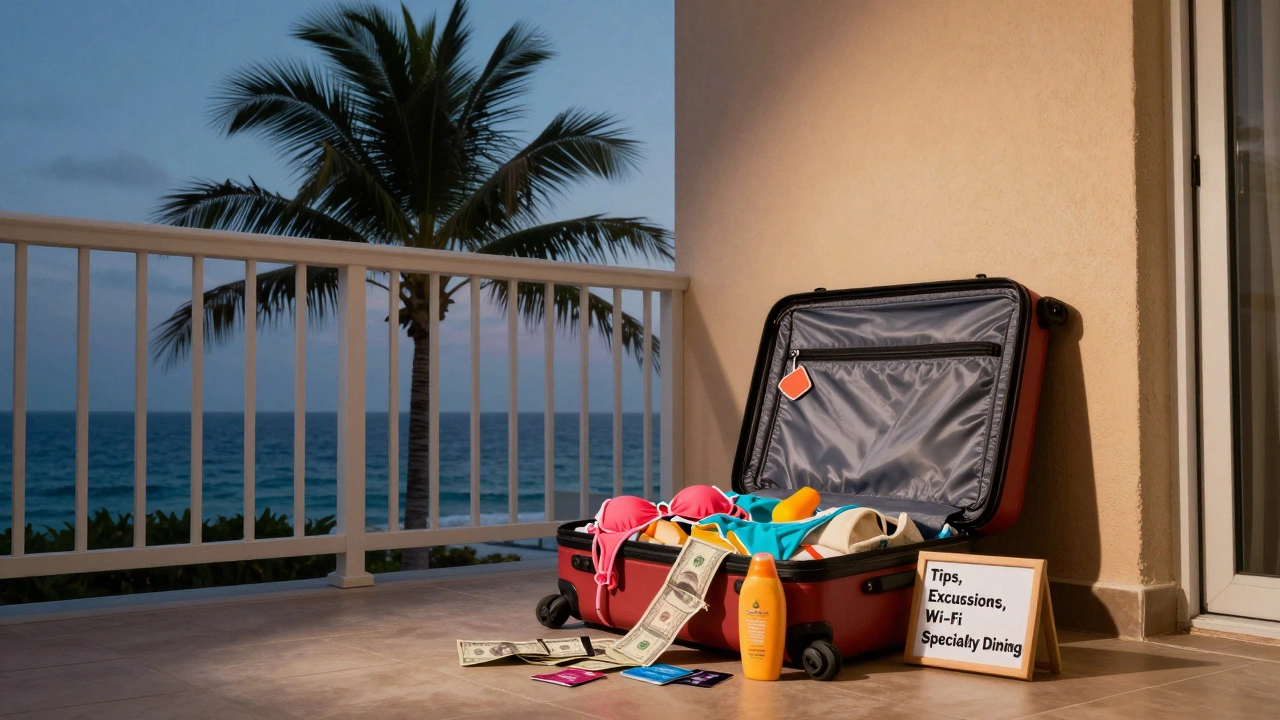
Here’s where most travelers get tripped up. Just because it’s "all-inclusive" doesn’t mean everything is included. You’ll often pay extra for:
- Premium drinks-Top-shelf liquor, imported beer, specialty cocktails, and wines not on the house list usually cost extra. A bottle of Grey Goose or a Mojito with fresh mint? That’s not in the package.
- Off-site excursions-Snorkeling trips, zip-lining, cultural tours, or day trips to nearby towns? Those cost extra. Even if the resort offers them, they’re not part of your all-inclusive ticket.
- Spa services-Massages, facials, saunas, and salon treatments? All extra. Some resorts give you a discount, but you’re still paying out of pocket.
- Gratuities-Yes, even in all-inclusive resorts, tipping is expected. Staff aren’t paid more because you chose this package. Many resorts now add a mandatory service fee (usually $10-$15 per person per day), but that doesn’t cover your bartender, waiter, or housekeeper. Leave cash tips if you want them to remember you.
- Wi-Fi and phone calls-Basic Wi-Fi might be free, but fast, reliable internet? That’s often a paid upgrade. International calls? Forget it. You’ll need to buy a local SIM card.
- Specialty dining-The Italian restaurant, the sushi bar, the steakhouse? Those are usually reserved for extra fees. Even if they’re on property, they’re not part of the "basic" all-inclusive deal.
What About Activities? Are They Really Free?
You’ll see brochures listing "free water sports," "yoga classes," and "nightly entertainment." That’s mostly true-but with limits. Kayaking and paddleboarding? Usually included. Snorkel gear? Often provided. But if you want to go scuba diving, you’ll pay $60-$100 per dive. Yoga on the beach? Free. Private lessons? Extra. Live music and talent shows? Free. Private cabana rental? That’s $75 a day.
Some resorts cap how many activities you can book per day. Others require reservations, and if you don’t sign up early, you’re out of luck. You can’t just show up and assume you’ll get a spot in the cooking class or the wine tasting. It’s not unlimited. It’s "included with availability."

How Much Extra Do People Actually Spend?
Real numbers from travelers in 2025 show that the average all-inclusive guest spends an extra $120-$250 per person for a 7-day trip. That’s not a tiny amount. It’s often more than the cost of a single meal at home. Why? Because people don’t expect to pay extra. They assume "all-inclusive" means "no more spending."
One couple from Toronto booked a 5-star all-inclusive in Punta Cana for $1,800 per person. By the end of the week, they’d spent another $410 on: premium cocktails, a snorkeling tour, a couples massage, airport transfers, and tipping staff. That’s 23% more than their original price.
Another family from the UK stayed at a mid-tier resort in Jamaica. They thought their kids could eat all day. But the kids got tired of the buffet and asked for pizza. The pizza was $18. The ice cream sundae after dinner? $12. The kids didn’t realize they were spending money-they just saw it as "more food." The parents didn’t realize they’d turned their "no-budget" trip into a $300 food bill.
How to Avoid the Surprises
You don’t have to get burned. Here’s how to plan smarter:
- Read the fine print-Before booking, find the resort’s "inclusions" page. Look for words like "select," "limited," "house brand," or "subject to availability."
- Ask about premium items-Call the resort directly. Ask: "What drinks are extra? Are there fees for dining at the steakhouse? Is snorkeling gear free?"
- Set a daily spending limit-If you know you’ll spend $150 extra, budget for it. Don’t wait until you’re at the bar and realize you’ve blown your whole vacation fund on cocktails.
- Tip in cash-Carry small bills. Tip your waiter $5-$10 per day. It makes a difference, and you’ll get better service.
- Use cash or local currency-Many resorts accept USD, but exchange rates are terrible. Pay in local currency (pesos, pesos, Jamaican dollars) to avoid hidden markups.
Is All-Inclusive Worth It?
Yes-if you know what you’re getting. If you’re the type who likes to relax, eat, drink, and nap without thinking about costs, then all-inclusive is perfect. You won’t stress over bills. You’ll enjoy the vibe.
But if you like trying local food, exploring markets, or taking cheap day trips, then an all-inclusive might not be the best fit. You’ll be stuck on resort property, paying extra for every adventure outside.
For families with young kids? All-inclusive is a lifesaver. No need to hunt for restaurants. No one’s hungry. No one’s bored.
For couples who want romance? Go all-inclusive if you’re fine with sunset cocktails and beach dinners. Skip it if you want to wander into a tiny local restaurant and try street food.
For solo travelers? It’s expensive. You’re paying for a package you won’t use fully. A hotel with breakfast included might be smarter.
Final Thought: It’s Not Magic. It’s a Package.
"All-inclusive" isn’t a free pass. It’s a pre-paid bundle with rules. Think of it like a gym membership: you pay upfront for access, but not everything inside is free. Some equipment costs extra. Personal training? Extra. Sauna? Maybe extra.
The same goes for resorts. You’re paying for convenience, not freedom. If you want total freedom to spend however you like, book a hotel and eat out. If you want to relax without counting every dollar, then all-inclusive works-but only if you know the fine print.
Do all-inclusive resorts include airfare?
No. All-inclusive means everything at the resort is covered-room, meals, drinks, some activities. Airfare is always extra, unless you booked a package deal through a travel agency that bundles flights. Always check what’s included before booking.
Are tips included in all-inclusive resorts?
Sometimes, but not always. Many resorts now add a mandatory service fee (around $10-$15 per person per day), but this often doesn’t go directly to staff. Cash tips are still expected and appreciated. Servers, bartenders, and housekeepers rely on tips to make a living. Don’t assume they’re already paid.
Can I eat as much as I want at all-inclusive resorts?
Yes, within reason. Buffets and main restaurants let you eat as much as you want during open hours. But if you want premium food-like lobster, steak, or sushi-you’ll likely pay extra. Also, some resorts limit how many times you can use specialty restaurants per week. Don’t expect unlimited access to every dining option.
Is it cheaper to book an all-inclusive or book separately?
It depends. For families, all-inclusive is often cheaper because you’re paying one price for food, drinks, and activities. For solo travelers or foodies who want to explore local restaurants, booking a hotel and eating out can be cheaper. Compare the total cost-including extras like taxis, meals, and excursions-before deciding.
What’s the biggest mistake people make with all-inclusive vacations?
Assuming "all-inclusive" means "no extra costs." People show up thinking they won’t spend another dollar-and then end up paying hundreds on drinks, excursions, and tips. The smartest travelers read the fine print, budget for extras, and treat the resort like a curated experience-not a blank check.