

Ultra-Luxury Resort Verifier
The term "6-Star" is a marketing myth, not an official rating. Use this tool to check if a property's claimed luxury matches the reality of high-end hospitality standards.
Select features that apply to your experience or research:
You’ve probably seen it in an Instagram caption or heard a friend brag about their "six-star" vacation. But here’s the kicker: 6 star resort is not an official classification recognized by any major global tourism authority. There is no international body that hands out stars beyond five. So why do we keep hearing about them? Because marketing teams are brilliant at inventing categories to make you feel like your money bought something exclusive, rare, and untouchable.
If you’re planning a trip and see this label, don’t panic. It doesn’t mean the place has failed inspection or broken the scale. It usually means the property offers service levels, amenities, or exclusivity that far exceed standard five-star expectations. Think of it less as a grade and more as a vibe check. This article breaks down what actually constitutes a six-star experience, where these mythical properties hide, and how to tell if the price tag matches the promise.
The Star Rating System Explained
To understand the six-star myth, you first need to know how the real system works. Most countries use a one-to-five star scale. These ratings assess basic infrastructure, safety, cleanliness, and service consistency. A one-star hotel might just offer a bed and a shared bathroom. A five-star hotel guarantees concierge services, fine dining, spas, and high-end linens.
Agencies like Forbes Travel Guide or AAA (American Automobile Association) set strict criteria. For example, Forbes requires anonymous inspectors to evaluate up to 900 specific standards for a Five-Star rating. If a hotel misses even a few critical points, it drops to Four-Star. There is no box for Six-Star on the checklist. When a property claims six stars, they are stepping outside the official framework entirely.
| Rating Level | Status | Key Characteristics | Regulatory Body |
|---|---|---|---|
| 1-3 Stars | Official | Basic amenities, limited service, functional rooms | National Tourism Boards / AAA |
| 4 Stars | Official | Enhanced comfort, multiple dining options, good service | National Tourism Boards / AAA |
| 5 Stars | Official | Luxury amenities, extensive service, high-end decor | Forbes Travel Guide / AAA |
| 6+ Stars | Unofficial | Hyper-personalization, extreme exclusivity, unique experiences | Marketing Departments / Self-Proclaimed |
Where Did the Term Come From?
The term gained traction in the late 1990s and early 2000s. One of the earliest famous examples was the Burj Al Arab in Dubai. Opened in 1999, its PR team famously claimed it was the world’s first seven-star hotel. Why? To differentiate itself from the crowded field of five-star luxury properties. They wanted to signal that while other hotels were excellent, this one was on another planet.
This worked. Travelers loved the idea of exceeding the maximum possible score. Soon, other ultra-luxury brands adopted similar language. Today, you’ll find references to six-star resorts in places like the Maldives, French Polynesia, and remote islands in the Indian Ocean. These locations often market themselves as private island escapes where the rules of traditional hospitality don’t apply.
What Actually Makes a Resort "Six-Star"?
Since there’s no official checklist, what defines the experience? It comes down to three things: anticipation, privacy, and customization. A five-star hotel reacts to your needs. A six-star resort anticipates them before you speak.
Consider the level of staff-to-guest ratio. In a standard luxury hotel, you might have one staff member for every ten guests. In a so-called six-star property, that ratio can drop to one-on-one or even two staff members per guest. This allows for hyper-personalized service. Your preferences aren’t just noted; they are memorized. If you mentioned liking a specific type of pillow three years ago, it will be waiting for you upon arrival.
Privacy is another huge factor. Many six-star resorts are located on private islands or secluded peninsulas. You won’t share a beach with hundreds of tourists. Often, each villa has its own pool, butler, and direct access to the ocean. The architecture is designed to eliminate visual contact with neighbors. This isn’t just about space; it’s about psychological seclusion.
Real Examples of Ultra-Luxury Experiences
Let’s look at a few properties often labeled as six-star to see what sets them apart.
Burj Al Arab in Dubai remains the poster child. While officially rated five stars by most bodies, its gold leaf interiors, helicopter landing pad, and underwater restaurant create an aura of excess that defies standard categorization. Staying here costs upwards of $1,500 per night for a basic room.
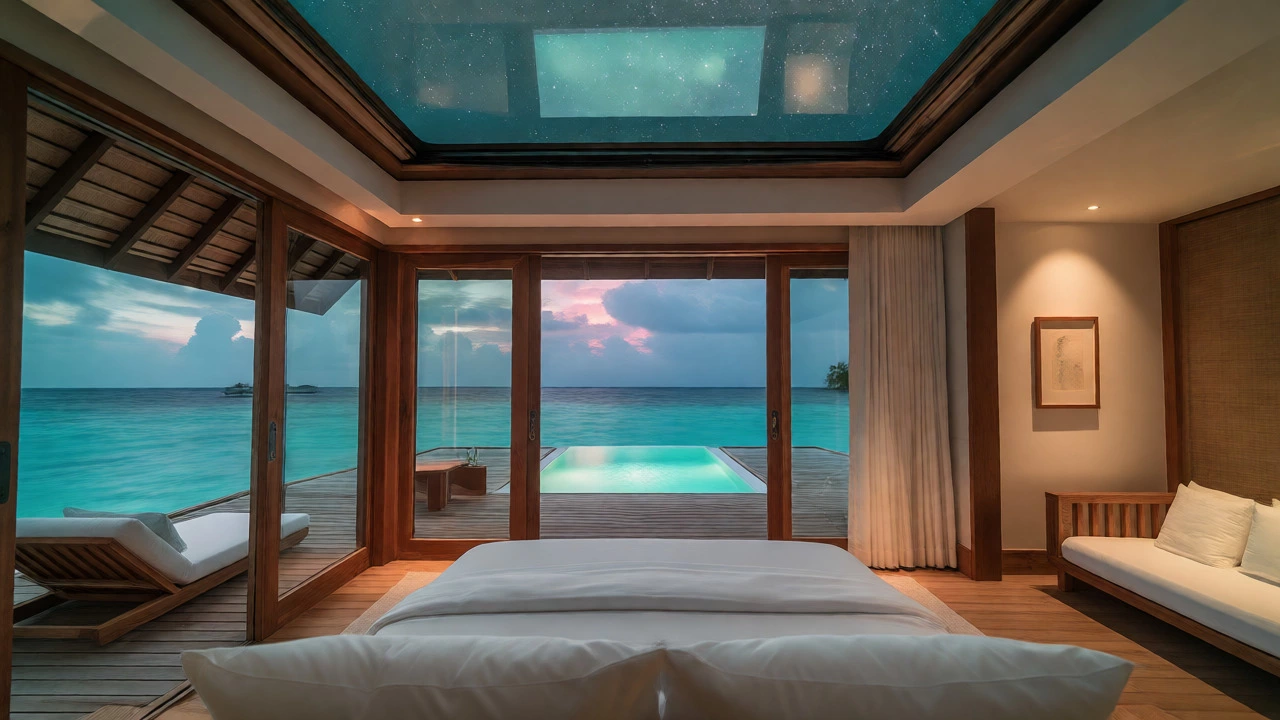
In the Maldives, Soneva Jani offers overwater villas with retractable roofs. You can watch the stars from your bed without leaving the warmth of your suite. Their "No News, No Shoes" policy strips away the stress of modern life, forcing you to disconnect. This isn’t just a hotel; it’s a curated lifestyle intervention.
Then there’s Aman Resorts, specifically properties like Aman Tokyo or Aman Venice. They focus on minimalism and silence. Staff are trained to be invisible until needed. The aesthetic is understated, using natural materials like stone and wood rather than gold and marble. For many wealthy travelers, this quiet elegance feels more luxurious than flashy opulence.

Is It Worth the Money?
This depends entirely on what you value. If you want a consistent, reliable luxury experience with great food and comfortable beds, a solid five-star hotel is often better value. You save thousands of dollars and get 90% of the same physical amenities.
However, if you are traveling for a special occasion-a honeymoon, an anniversary, or a milestone birthday-the extra cost of a six-star resort buys you time and memory. The ability to skip lines, have meals served exactly when you want them, and never worry about logistics adds a layer of ease that is hard to put a price on. For executives burning out from high-stress jobs, the absolute silence and privacy of a remote six-star retreat can be worth the premium.
But beware of "luxury washing." Some mid-range boutique hotels slap the "six-star" label on their brochures to justify higher rates. Always check recent reviews on trusted platforms. Look for comments about service responsiveness and maintenance issues. A truly six-star property will have flawless execution across all touchpoints.
How to Spot a Genuine Ultra-Luxury Property
Don’t rely on the star count alone. Here is a quick checklist to verify if a resort delivers on its promises:
- Staff Ratio: Ask directly how many staff members serve each guest. Anything below 2:1 is unlikely to offer true six-star personalization.
- Exclusivity: Can you book out the entire property? Are there restrictions on guest numbers per day? True luxury limits capacity.
- Customization: Can they accommodate highly specific requests, such as sourcing a particular vintage of wine or arranging a private museum tour after hours?
- Transparency: Does the pricing include everything? Hidden fees for Wi-Fi, minibar, or airport transfers can ruin the illusion of seamless luxury.
Ultimately, the term "six-star" is a marketing tool, but it points to a real tier of hospitality. It represents the upper echelon of human service, where the goal is not just to satisfy you, but to delight you in ways you didn’t expect. Whether you call it five-star plus or six-star, the experience should feel effortless. If you leave feeling stressed by the process, you paid for the wrong thing.
Does a 6-star resort exist officially?
No, there is no official international body that awards a 6-star rating. The highest official rating is typically 5 stars, awarded by organizations like Forbes Travel Guide or AAA. The term "6-star" is purely a marketing label used by hotels to signify exceptional luxury beyond standard 5-star criteria.
Which hotel claims to be 7 stars?
The Burj Al Arab in Dubai is famously marketed as a 7-star hotel. However, this is a self-proclaimed title. Officially, it holds a 5-star rating from most accreditation bodies. The claim was created to distinguish it from other top-tier luxury hotels.
What is the difference between 5-star and 6-star service?
5-star service is reactive and standardized; it meets high expectations consistently. 6-star service is proactive and hyper-personalized. It involves anticipating guest needs before they are expressed, offering extreme privacy, and providing unique, bespoke experiences that cannot be replicated elsewhere.
Are 6-star resorts only for celebrities?
While popular with celebrities and ultra-high-net-worth individuals, 6-star resorts are accessible to anyone who can afford the rate. Many offer packages for honeymooners or special occasions. The barrier is primarily financial, not social.
Can I trust online reviews claiming 6 stars?
Be cautious. Since the rating is unofficial, some properties may use it loosely. Look for detailed reviews that mention specific instances of personalized service, staff attentiveness, and exclusivity. Cross-reference with reputable travel guides like Condé Nast Traveler or Travel + Leisure.