

Flight Savings Calculator
Your Savings Analysis
Smart Booking Tips:
The Tuesday and Wednesday Sweet Spot
Have you ever noticed how your friends seem to get those ridiculously cheap tickets while you’re stuck paying full price for the same route? It’s not luck. It’s timing. If you are planning a city break and want to keep more cash in your pocket, knowing when to book is just as important as where you go.
The short answer is that midweek flights are almost always cheaper than weekend ones. Specifically, Tuesdays and Wednesdays are historically the least expensive days to fly. This isn’t a random guess; it’s based on how airlines manage their inventory and predict demand. Most people work Monday through Friday. They want to leave on Friday evening or Saturday morning and return Sunday night or Monday morning. Airlines know this. They raise prices for these high-demand slots because they know business travelers and vacationers will pay them.
But what about the rest of us? The leisure travelers who can be flexible? We have an advantage. By shifting our departure day to a Tuesday or Wednesday, we step into a gap in the market. Fewer people are flying then. To fill those empty seats, airlines drop their prices. Sometimes, the difference between a Friday flight and a Tuesday flight on the same route can be hundreds of dollars. That’s money you could spend on dinner in Paris or a museum pass in Tokyo.
Why Do Prices Change So Much?
To understand why midweek is cheaper, you need to look at how airline pricing works. It’s not static. It’s dynamic. Think of it like Uber surge pricing, but much more complex. Airlines use sophisticated algorithms to adjust fares in real-time based on how many seats are left and how fast they are selling.
There are two main types of travelers: business and leisure. Business travelers often book last minute. They don’t care if the ticket costs $500 or $800; their company pays, and they need to be there for a meeting. Leisure travelers, like you and me, plan ahead. We care about cost. We compare options. We are price-sensitive.
Airlines try to capture both groups. They keep some seats expensive for the business crowd who books late. They offer lower fares early on to attract the leisure crowd who plans months in advance. When you fly on a Tuesday, you are competing mostly with other leisure travelers and a few budget-conscious business people. There is less pressure from the high-paying corporate segment. This keeps the base price lower.
Also, consider the logistics. Airports are busiest on weekends. More flights mean more congestion, which can lead to delays. While this doesn’t directly lower the ticket price, it does make the travel experience less pleasant. Flying midweek often means smoother operations, shorter security lines, and fewer cancellations due to cascading delays from weekend traffic.
The Best Time to Book Your Ticket
Finding the cheapest day to fly is only half the battle. You also need to know when to buy the ticket. Many people think waiting until the last minute will result in a bargain. In most cases, it’s the opposite. Prices usually rise as the departure date gets closer.
For domestic flights within countries like the United States or South Africa, the sweet spot for booking is typically one to three months in advance. For international city breaks, aim for two to six months ahead. Booking too early (more than six months out) might mean you miss out on sales or adjusted schedules. Booking too late (less than three weeks out) usually means you’re paying premium prices.
There is a common myth that booking on a Tuesday at midnight gives you the best deals. This idea came from when airlines used to release fare sales on Tuesday mornings. Other airlines would match those prices by Wednesday. Today, with instant online updates, this window has blurred. However, data still suggests that browsing and booking on a Tuesday or Wednesday afternoon can sometimes yield better results simply because competition among airlines is actively adjusting rates during the work week.
How to Find the Lowest Fares
Knowing the theory is great, but you need practical tools to find those deals. Here is a strategy that works:
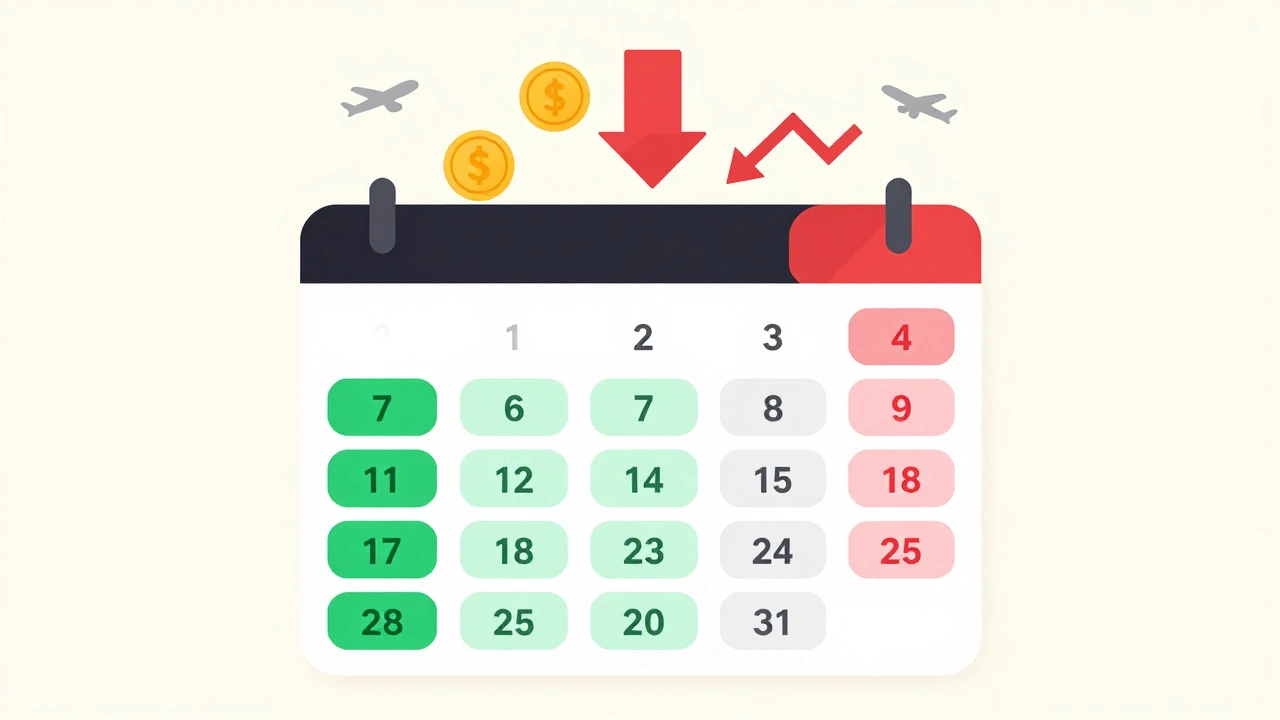
- Use Flexible Date Searches: Most flight search engines like Google Flights, Skyscanner, or Kayak allow you to view prices across an entire month. Look for the calendar view. You will likely see a clear pattern where midweek dates are highlighted in green or marked as lower cost.
- Set Price Alerts: Don’t just check once. Set up alerts for your desired route. When the price drops, you’ll get an email. This takes the stress out of constantly checking manually.
- Be Open to Nearby Airports: If you are flying to a major city, check alternative airports. For example, if you want to visit London, check Gatwick, Luton, or Stansted in addition to Heathrow. Sometimes flying into a smaller airport saves significant money, even with the added train or bus ride.
- Clear Your Cookies (Maybe): There is debate about whether websites track your searches to raise prices. While evidence is mixed, it doesn’t hurt to use incognito mode or clear cookies before searching again. It ensures you are seeing fresh data.
Weekend Travel: Is It Ever Worth It?
Sometimes, life happens. Maybe you only have a long weekend off. Maybe your partner works weekends. Does that mean you should give up on saving money? Not necessarily. While Saturday and Sunday flights are generally more expensive, there are exceptions.
Late-night red-eye flights on Fridays or Sundays can sometimes be cheaper because they are less desirable. People prefer to sleep in rather than wake up at 4 AM for a 6 AM flight. If you can handle the fatigue, you might find a deal. Also, holiday weekends can be tricky. Prices spike around major holidays like Christmas, Thanksgiving, or Easter. But the days immediately before or after the peak holiday dates can sometimes dip slightly as demand normalizes.
If you must fly on a weekend, try to depart on Saturday morning. Saturday is often the lowest demand day for business travel, so some airlines lower prices to attract leisure travelers starting their trips. Returning on Sunday night is usually the most expensive slot, so if possible, push your return to Monday morning, even if it’s early.
| Day of Week | Demand Level | Typical Price Range | Best For |
|---|---|---|---|
| Monday | Medium-High | Moderate to High | Business travelers returning |
| Tuesday | Low | Lowest | Budget-conscious leisure travelers |
| Wednesday | Low | Lowest | Budget-conscious leisure travelers |
| Thursday | Medium | Moderate | Business travelers departing |
| Friday | High | High | Leisure travelers starting trips |
| Saturday | Medium | Moderate | Leisure travelers starting trips |
| Sunday | Very High | Highest | Leisure travelers returning home |

Hidden Costs to Watch Out For
When you find a cheap flight on a Tuesday, celebrate, but check the fine print. Low-cost carriers often advertise bare-bones fares. You might save on the ticket, but lose money on baggage fees, seat selection, and boarding passes printed at the airport.
Always calculate the total cost. Add in checked bags if you need them. Factor in meals if the flight is long. Compare this total to a slightly more expensive traditional airline ticket that includes these amenities. Sometimes, the "cheap" flight ends up costing more in the end. For a short city break, you might be able to travel light with just a carry-on, making low-cost carriers a genuine bargain. Just be prepared.
Seasonal Variations Matter Too
While midweek is generally cheaper, seasons play a huge role. Summer and winter holidays are peak times. Even a Tuesday flight in July or December might cost more than a Sunday flight in September or January. Shoulder seasons-spring and autumn-are often the best time to travel overall. The weather is mild, crowds are smaller, and prices are lower.
If you are flexible with your destination, use open-jaw searches. Enter your home city and select "Everywhere" or multiple destinations. See where the cheapest midweek flights are taking you. You might discover a new favorite city break spot you hadn’t considered before.
Is it really cheaper to fly on a Tuesday?
Yes, statistically, Tuesdays and Wednesdays are the cheapest days to fly. This is because demand is lower compared to weekends when most leisure travelers fly. Airlines lower prices to fill seats during these slower periods.
When is the best time to book a flight?
For domestic flights, book 1-3 months in advance. For international flights, aim for 2-6 months ahead. Avoid booking too early or too late, as prices tend to be higher at both extremes.
Do I need to book on a Tuesday to get a good deal?
Not necessarily. While browsing on a Tuesday might show competitive rates due to airline sales matching, the most important factor is booking well in advance and being flexible with your travel dates.
Are red-eye flights cheaper?
Often, yes. Late-night or very early morning flights are less popular because they disrupt sleep schedules. Airlines may lower prices to attract passengers willing to trade comfort for savings.
How can I avoid hidden fees on cheap flights?
Always read the terms and conditions. Calculate the total cost including baggage, seat selection, and payment processing fees. Compare this total with traditional airlines that include these services in the base fare.