Guided Tour Decision Helper
Answer these questions to determine if you should book a guided tour or explore independently.
Destination & Logistics
Personal Style & Budget
Your Verdict:
...Why we suggest this:
Pro Tip from the Article:
Information isn't insight. If you choose a tour, check reviews for mentions of "rushed" schedules or excessive shopping stops. A good guide filters noise; a bad one adds it.
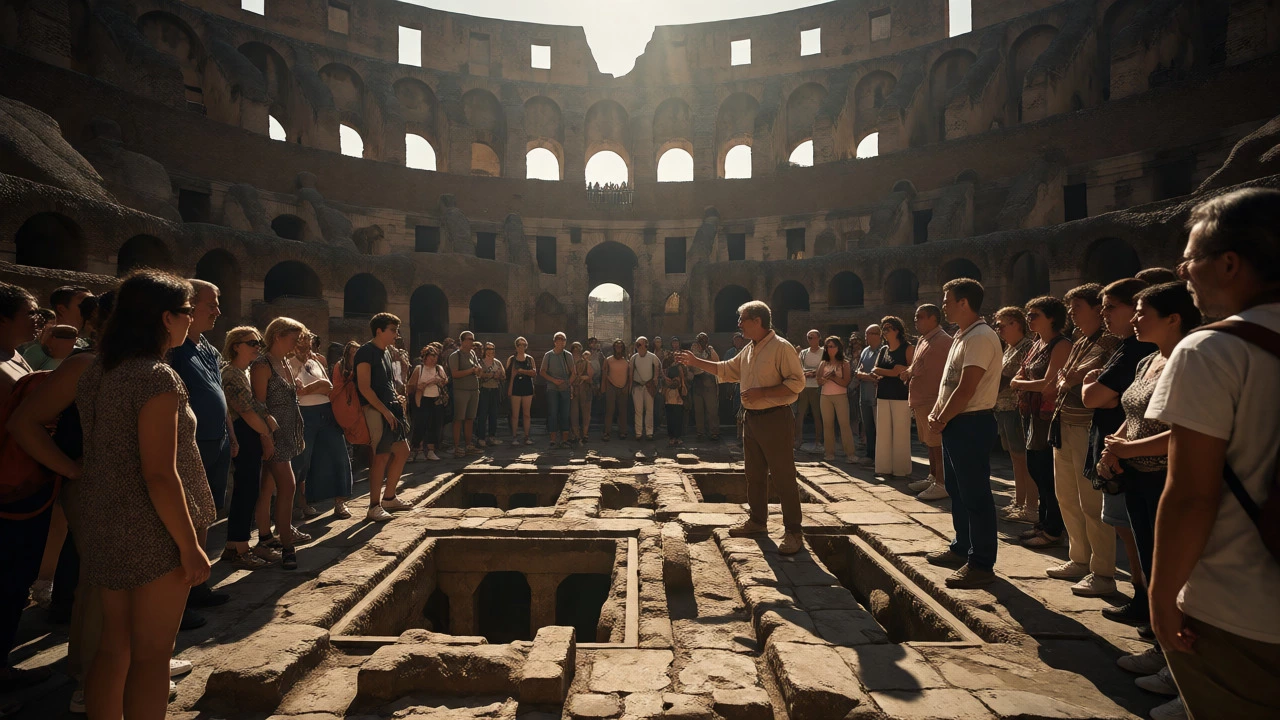
You’re standing in front of the Colosseum. The sun is beating down, your feet hurt from walking three miles already, and you have no idea which arch was actually used for gladiator entrances versus animal cages. You could pull out your phone, squint at a blurry Wikipedia page, and guess. Or, you could be part of a group listening to a local historian point out the trapdoor mechanisms still visible in the floor. That difference? That’s what it means to go on a guided tour. It’s not just about seeing things; it’s about understanding them through someone else’s eyes.
But let’s get real for a second. The term "guided tour" gets thrown around a lot. Sometimes it means a stiff, two-hour bus ride where everyone falls asleep. Other times, it’s an intense, three-hour food crawl through back alleys that leaves you full and with five new Instagram-worthy photos. So, what does it actually mean to sign up for one? Is it worth the money? Do you lose your freedom? Let’s break down the mechanics, the benefits, and the traps so you can decide if this style of travel fits your vibe.
The Core Definition: Structure vs. Freedom
At its simplest, a guided tour is a pre-arranged travel experience led by a knowledgeable person-the guide-who manages the logistics, timing, and narrative. Unlike independent travel, where you wake up and decide "maybe I’ll see a museum today," a guided tour has a fixed itinerary. This structure is both its biggest selling point and its most common criticism.
Think of it like a movie versus reading the book. Independent travel is reading the book; you control the pace, you skip the boring parts, and you interpret the characters yourself. A guided tour is the movie adaptation. Someone else decided which scenes made the cut, they added a soundtrack (the guide’s stories), and they ensured you didn’t miss the plot twist behind the cathedral. For many travelers, especially those visiting complex historical sites or foreign cultures with language barriers, this curated experience reduces cognitive load. You don’t have to worry about tickets, directions, or context. You just show up and absorb.
However, this structure comes with a trade-off. If you hate being told when to eat, when to walk, and when to leave, a guided tour might feel restrictive. The key is knowing what kind of guide you’re hiring. Are they a strict timekeeper, or are they flexible enough to let you linger at a painting that moves you? Most modern tours try to strike a balance, but the core definition remains: you are trading total autonomy for curated expertise and logistical ease.
Types of Guides: Who Is Actually Talking?
Not all guides are created equal. When you ask "what does it mean to go on a guided tour," you also need to ask "who is leading me?" The type of guide drastically changes the experience. Here is how the landscape looks:
| Guide Type | Primary Focus | Typical Group Size | Best For |
|---|---|---|---|
| Professional Historian | Deep factual accuracy, academic context | 10-20 people | Museums, archaeological sites |
| Local Resident | Personal anecdotes, hidden gems, current trends | 4-8 people | Food tours, neighborhood walks |
| Adventure Leader | Safety, physical activity management | 6-12 people | Hiking, kayaking, cycling |
| Bus Driver/Tour Manager | Logistics, broad overviews, entertainment | 30-50+ people | Day trips, multi-city circuits |
A professional historian will give you dates, names, and architectural details. They might bore you if you just want to take pictures. A local resident, often found on platforms like Airbnb Experiences or GetYourGuide, might not know the exact year a building was constructed, but they’ll tell you why the locals hate the new café next door and where to get the best espresso. An adventure leader focuses on keeping you alive while you climb a mountain. Understanding these distinctions helps you pick the right "meaning" for your trip. If you want facts, hire the expert. If you want vibes, hire the local.

The Value Proposition: Why Pay for Information?
In the age of smartphones, information is free. You can look up any fact instantly. So why pay $50 to hear someone talk? Because information isn’t insight. There is a massive difference between knowing the Eiffel Tower is 330 meters tall and understanding why Gustave Eiffel hated the initial public backlash against his design. A good guide provides narrative. They connect dots you wouldn’t see on your own.
Consider a visit to the Louvre. Without a guide, you might spend two hours wandering, feeling overwhelmed, and only remembering the Mona Lisa. With a focused art history guide, you might spend two hours looking at just twenty paintings, learning how lighting changed during the Baroque period, and noticing how certain brushstrokes reflect political turmoil. The guide filters the noise. They prioritize what matters based on their expertise. This filtering is valuable because human attention spans are limited. By curating the experience, the guide ensures you leave with coherent memories rather than a blur of images.
There is also the social aspect. Traveling solo can be lonely. Joining a small-group tour puts you in contact with other curious people. You might meet a couple from Canada who recommends a hotel in Kyoto, or a student from Brazil who teaches you a slang phrase. These interactions are a byproduct of the shared structure. You’re all on the same journey, literally and figuratively. For introverts, this can be a low-pressure way to socialize because the conversation revolves around the tour content, not awkward small talk.

The Pitfalls: When Tours Feel Like Traps
It’s not all sunshine and educational epiphanies. Some guided tours are essentially shopping expeditions disguised as culture. You’ve probably heard horror stories about bus tours stopping at a "local craft factory" for forty-five minutes, where the only exit leads through a gift shop. This is the commodification of travel. The guide’s primary job becomes driving sales commissions, not sharing knowledge.
How do you spot these traps? Look at the itinerary closely. If there are multiple stops labeled "free time for shopping" or visits to non-historical commercial centers, be wary. Also, check the review sections specifically for mentions of "rushed" or "too many shops." Authentic cultural tours usually limit retail stops to one or two, or none at all. Another red flag is overly large groups. Once you exceed twenty people, the guide has to shout, you have to crowd around them, and you lose the intimacy of the experience. You become a herd, not a participant.
Then there is the issue of perspective. Every guide has a bias. A tour run by a government tourism board might gloss over political controversies. A tour run by a radical activist collective might focus exclusively on inequality. Neither is "wrong," but they present a partial truth. Going on a guided tour means accepting that you are viewing the destination through a specific lens. If you care about neutrality, read reviews to understand the guide’s background. If you want depth, embrace the bias-it’s better than having no perspective at all.
Deciding If It’s Right For You
So, should you book that tour? Here is a quick heuristic to help you decide. Use guided tours when:
- The site is complex: Historical ruins, museums with thousands of items, or religious sites with intricate rituals benefit greatly from explanation.
- You have limited time: If you only have four hours in Rome, a private guide can navigate traffic and queues faster than you can figure them out alone.
- You want safety: In areas with language barriers or potential scams, a guide acts as a shield and translator.
- You seek connection: Solo travelers often find tours easier than trying to make friends in hostels.
Avoid guided tours when:
- You love spontaneity: If getting lost is part of the fun, a rigid schedule will frustrate you.
- The site is simple: A beach, a scenic viewpoint, or a small town doesn’t need narration. Just enjoy the view.
- Budget is tight: You can often replicate a generic city walk by downloading a free audio guide app and walking it yourself.
Ultimately, going on a guided tour means choosing efficiency and context over absolute freedom. It’s a tool, not a rule. Use it when you need help decoding a place; ditch it when you want to decode it yourself.
Is a guided tour always more expensive than traveling alone?
Yes, upfront costs are higher. However, consider the hidden costs of independent travel: wasted time figuring out transport, buying wrong tickets, or missing key sights. For complex cities like Tokyo or London, a tour can save money by bundling entry fees and preventing inefficient transit mistakes. But for simple destinations, yes, it’s purely extra cost.
Can I leave a guided tour early if I’m bored?
Usually, yes, but policies vary. Large bus tours rarely allow early exits because of logistics. Small group walking tours are often more flexible. Always ask before booking. If you leave, you typically forfeit the rest of the fee, so weigh whether the boredom is worth the sunk cost.
What is the difference between a private and a group tour?
A private tour is exclusive to your party. You set the pace, choose topics, and change plans on the fly. It’s significantly more expensive but offers maximum flexibility. A group tour shares the guide with strangers. It’s cheaper and social, but you must adhere to the group’s pace and interests, which may not align perfectly with yours.
Do tour guides expect tips?
In countries like the US and Canada, tipping is standard practice (10-20% for multi-day, $5-$10 per person for short tours). In Europe, it’s appreciated but not mandatory unless service was exceptional. In Asia, practices vary widely-check local norms. Tipping acknowledges the guide’s effort beyond the base wage.
Are online audio guides a replacement for live guides?
They are a budget-friendly alternative for straightforward sites. Audio guides provide facts and translations without the social pressure. However, they lack adaptability. An audio guide can’t answer your question about why that statue looks weird, nor can it adjust the route if you’re tired. Live guides offer interaction and customization; audio guides offer convenience and solitude.