
UK Trip Duration Estimator
1. Select Your Destinations
Click the regions you want to visit:
2. Choose Your Travel Pace
Quick Breakdown: Choosing Your Timeline
Before you book your flights, you need to decide what kind of traveler you are. Are you a 'city hopper' or a 'slow wanderer'? Most people find that anything under 7 days feels like a sprint, while 14 to 21 days allows for a deeper dive into the culture. Here is a quick cheat sheet to help you decide.
| Duration | Best For... | Key Focus | Pace |
|---|---|---|---|
| 3-5 Days | The First-Timer | London only | Hectic |
| 7-10 Days | The Classic Tour | London + 1 or 2 other cities | Moderate |
| 14-21 Days | The Explorer | England, Scotland, and Wales | Relaxed |
| 30+ Days | The Deep Dive | All four nations + rural gems | Slow |
The Short Sprint: 3 to 5 Days
If you're on a tight schedule or just stopping over, you have to be realistic: you're staying in London. Trying to squeeze in Edinburgh or Bath in five days usually results in spending more time on a train than actually seeing a monument.
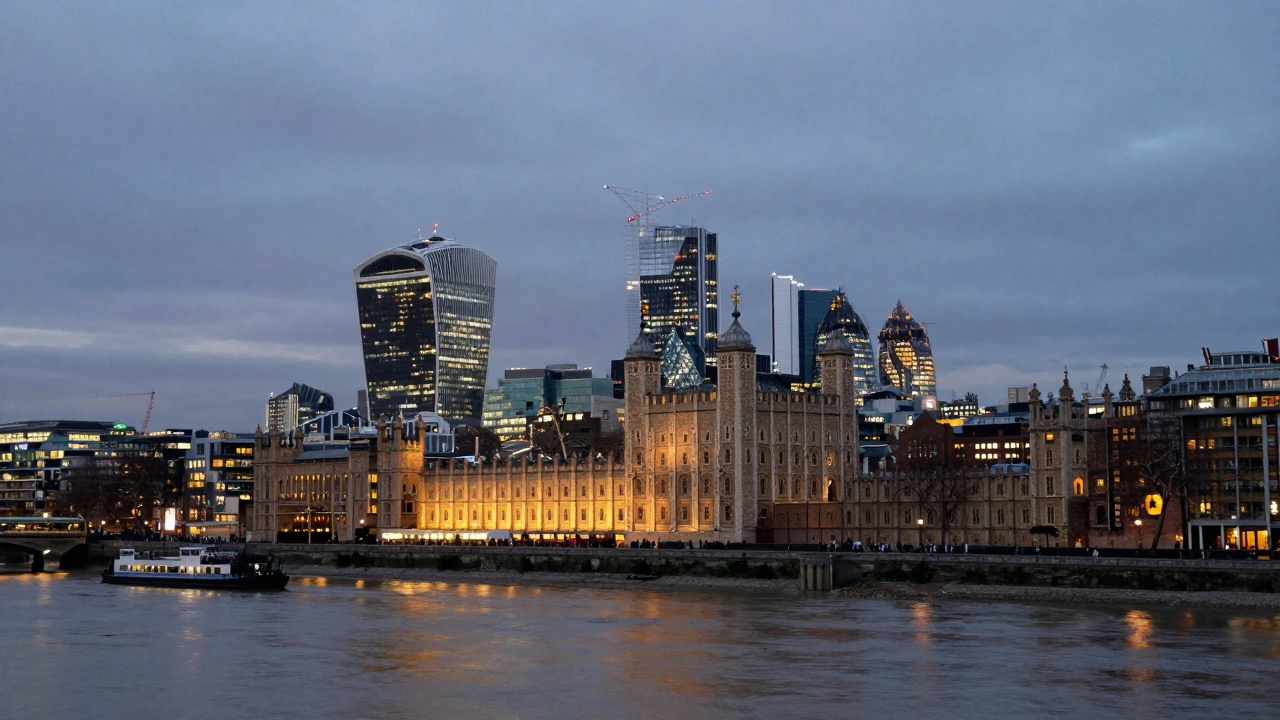
In a five-day window, you can hit the heavy hitters. You've got time for the Tower of London, a walk along the South Bank, and maybe a trip to Westminster. If you're feeling ambitious, you could take a day trip to Windsor to see the castle, but that's about the limit. The goal here isn't to see the UK; it's to see the capital. You'll leave feeling like you've scratched the surface, but you won't feel like you missed out on the 'real' England because you weren't trying to do too much.
The Classic Experience: 7 to 10 Days
This is the sweet spot for most international visitors. Ten days gives you enough breathing room to leave the city and see how the landscape changes. You can spend four days in London and then head north or west.
A popular route for this timeframe is the 'London and the North' path. After your city fix, you can take the train up to York, a walled city that feels like a movie set, and then finish in Edinburgh. Edinburgh is a must-the contrast between the Old Town's narrow alleys and the New Town's grand avenues is striking.
Alternatively, you could head south to Bath and the Cotswolds. Imagine honey-colored stone cottages and rolling green hills. If you choose this, you're trading the Highlands for the English countryside. Both are great, but you can't do both in ten days without feeling like you're living out of a suitcase.
The Full Exploration: 14 to 21 Days
Three weeks is where the magic happens. This is the duration that transforms a vacation into an experience. With 21 days, you can actually tackle the United Kingdom's diverse geography without burning out.
You can start in London, spend a few days in the Cotswolds, swing through the Lake District for some hiking, and then spend a full week in Scotland. In Scotland, you don't just want to see Edinburgh; you want to hit the Highlands and perhaps the Isle of Skye. The drive from Fort William to the coast is one of the most scenic journeys in the world, but it takes time. You can't rush a glenside view.
This timeframe also allows you to cross into Wales. A visit to Snowdonia National Park or the castles of Conwy and Caernarfon adds a layer of rugged beauty that you just don't get in the English south. You'll find that by day 15, you stop checking your watch and start actually noticing the architecture and the local quirks.
The Deep Dive: 30 Days and Beyond
When you have a month, you're no longer a tourist; you're almost a temporary resident. This is the only way to properly include Northern Ireland. Flying or sailing into Belfast allows you to see the Giant's Causeway and the murals of the city without feeling like you're rushing back to a flight.
A month-long trip lets you explore the 'forgotten' parts of the UK. You can visit the peaks of the Peak District, explore the industrial history of Manchester and Liverpool, and even spend a few days on the coast of Cornwall. You have the luxury of 'buffer days'-days where you do absolutely nothing but sit in a pub with a pint and a book, which is a vital part of the British experience.
Logistics That Eat Your Time
One mistake people make is forgetting that travel time is not 'sightseeing time.' If you plan to go from London to the Highlands, remember that it's not just a quick hop. Even with the high-speed rail, you're looking at several hours of transit, plus checking into hotels and finding your way around.
If you're renting a car, remember that UK roads-especially in the Cotswolds or Scotland-are often narrow, winding lanes. A 50-mile journey might take two hours because you're constantly pulling over to let a tractor pass or stopping to take a photo of a sheep. If you're relying on National Rail, you'll save time on the main arteries but lose it in the 'last mile' getting to your B&B.
Practical Tips for Planning Your Stay
- The 3-2-1 Rule: For every three cities you visit, spend at least two days in each, and leave one day as a 'floating' day for unexpected discoveries or rain delays.
- Group Your Regions: Don't zig-zag. If you're going to Scotland, do the West Coast and the Highlands in one block. Don't go from Edinburgh to London and then back up to the Isle of Skye.
- Seasonality Matters: In the summer, everything is open and the days are long (sunsets can be as late as 10 PM in the north). In winter, it gets dark by 4 PM, meaning you have fewer usable hours for sightseeing. Plan for more 'indoor' time in November through February.
- Avoid the 'Museum Fatigue': You can't do the British Museum, the V&A, and the National Gallery in one day. Give yourself a limit of one major attraction per day to avoid burnout.
Common Pitfalls to Avoid
The biggest trap is the 'Everything' Itinerary. I've seen people try to hit London, Oxford, Bath, the Cotswolds, York, Edinburgh, and the Highlands in seven days. They end up seeing the UK through a train window. You'll remember the hotel lobbies and the station platforms, but you'll forget the smell of the heather or the feel of the cobblestones.
Another mistake is underestimating the weather. A 'clear day' in the UK can involve three different types of rain in a single hour. If your itinerary is 100% outdoor activities, one bad week of weather can ruin a short trip. Always have a 'Rainy Day' list of museums, galleries, or cozy pubs for every city you visit.
Can I see the whole UK in two weeks?
You can see the 'highlights' of the whole UK in 14 days, but you won't see it all. A typical 2-week trip usually covers London, a bit of the English countryside, and the main cities of Scotland. You'll likely have to skip Wales and Northern Ireland to keep the pace manageable. If you try to include everything, you'll spend about 30-40% of your trip in transit.
Is it better to fly or take the train between cities?
For most routes, the train is superior. The rail network connects city centers directly, meaning you avoid expensive airport transfers and long security lines. Trains are generally faster for trips under 5 hours. Flying is only really worth it if you're heading to the far north of Scotland or crossing over to Northern Ireland.
How many days should I spend in London specifically?
For a first visit, 3 to 5 days is the standard. This gives you time to see the main landmarks and explore a few different neighborhoods like Soho or Camden. If you're a huge history buff or love museums, 7 days allows you to go deeper into places like the Tate Modern or the Natural History Museum without feeling rushed.
What is the best time of year for a longer trip?
Late spring (May-June) and early autumn (September-October) are the goldilocks zones. You get decent weather, the crowds are smaller than in July and August, and the landscape is stunning. Spring brings the blossoms, and autumn brings the incredible colors in the Scottish Highlands.
Do I need a car for a 10-day trip?
It depends on where you go. If you're sticking to London, York, and Edinburgh, you absolutely do not need a car-trains are way easier. However, if you want to see the Cotswolds, the Lake District, or the Scottish Highlands, a rental car is almost essential. Public transport in rural areas is sparse and can be very slow.
What to Do Next
Once you've picked your duration, your next step is to map your 'anchor cities.' These are the places where you'll spend 2 or more nights. For a 10-day trip, pick two anchors (e.g., London and Edinburgh). For a 21-day trip, pick three or four. This prevents you from moving hotels every single night, which is the fastest way to kill a vacation mood.
If you're still undecided, try the 'Must-Have' list method. Write down five things you absolutely cannot leave the UK without seeing. If those five things are in different corners of the country, you're looking at a minimum of 14 days. If they're all in the south, you can probably get away with a week. Just remember: the best parts of the UK are often the ones you find when you have enough time to get lost.