
Parenting Style Self-Assessment
Answer these 5 questions honestly about how you handle common challenges with your child. This tool is designed for self-reflection, not diagnosis.
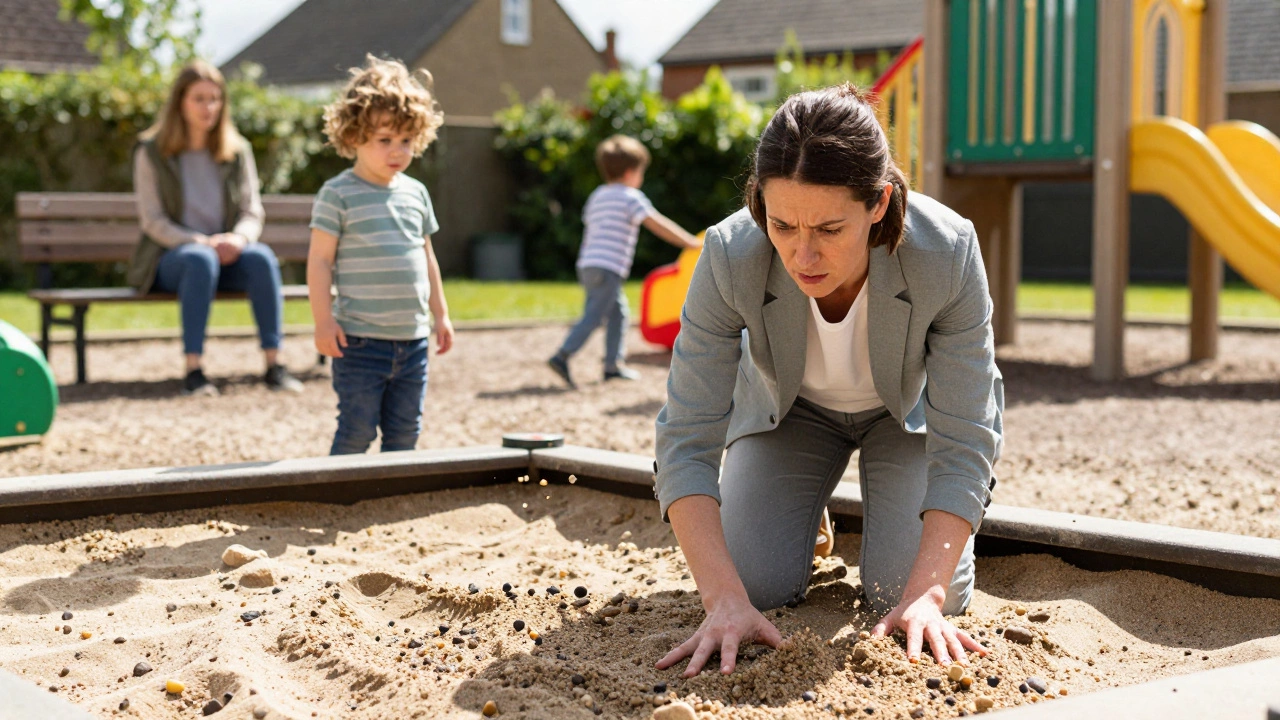
Imagine walking through a playground. You see one parent standing on the sidelines, watching intently but letting their child navigate the slide alone. Nearby, another parent is actively clearing pebbles from the sandbox, negotiating with other kids to ensure their child gets first turn on the swing, and immediately rushing over when a minor scuffle occurs. This second parent is often labeled a Lawnmower Mom, defined as a parent who aggressively removes obstacles and difficulties from their child's path to prevent any form of distress or failure. While the intention is rooted in love and protection, this style of parenting has sparked intense debate among psychologists, educators, and families today.
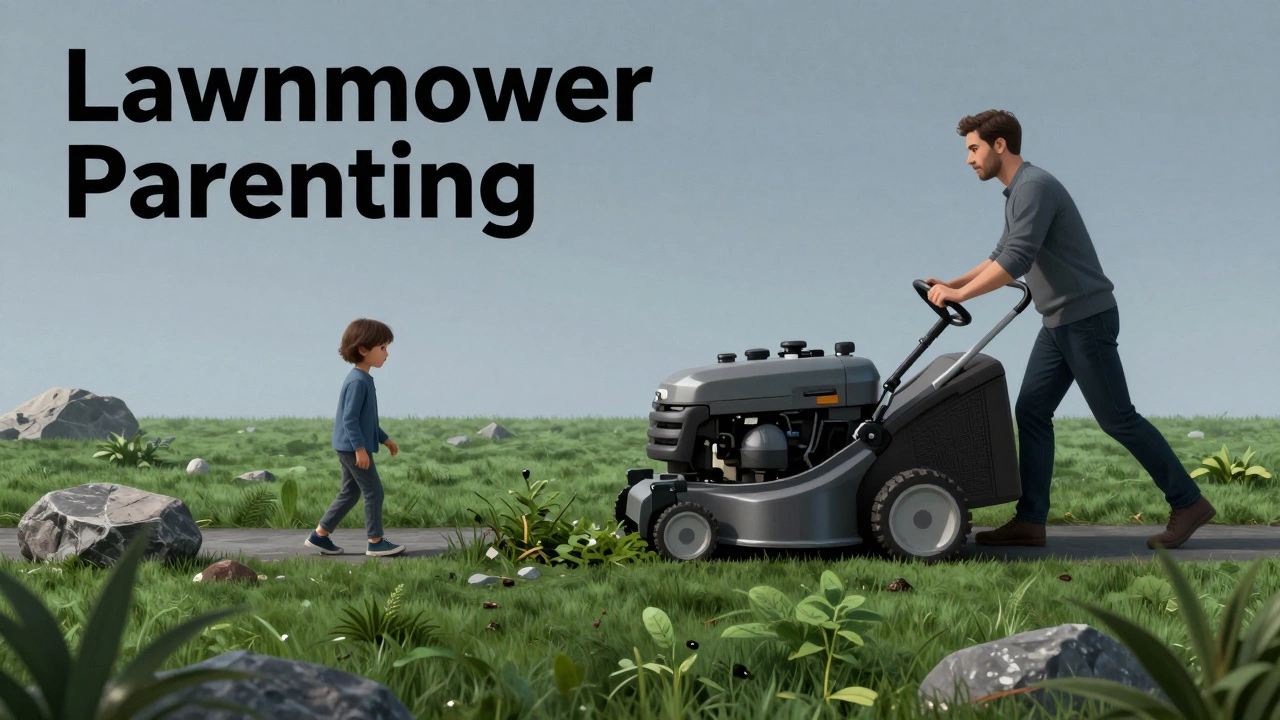
The term "Lawnmower Mom" (sometimes called a "Snowplow Parent") emerged in recent years to describe a specific evolution of Helicopter Parenting, which refers to parents who hover closely over their children, monitoring their every move and intervening frequently. If a helicopter parent watches from above, ready to swoop down if needed, a lawnmower parent drives ahead, flattening every potential hurdle before the child even reaches it. The core difference lies in timing and aggression: one reacts to problems; the other preemptively destroys them.
How Lawnmower Parenting Differs from Other Styles
To understand why this behavior is distinct, we need to look at how it compares to other well-known parenting frameworks. Traditional Authoritative Parenting balances warmth and support with clear expectations and boundaries, encouraging independence while providing guidance. In contrast, Permissive Parenting offers high warmth but low demands, allowing children significant freedom with minimal structure. Lawnmower parenting sits in a dangerous middle ground: it is highly involved (like authoritative) but lacks the boundary-setting that fosters autonomy.
| Parenting Style | Level of Control | Response to Failure | Goal for Child |
|---|---|---|---|
| Lawnmower | Very High | Prevents it entirely | Happiness without struggle |
| Helicopter | High | Intervenes immediately | Safety and success |
| Authoritative | Moderate | Supports through it | Resilience and competence |
| Neglectful | Low | Ignores it | Self-reliance by default |
The key distinction is that lawnmower parents do not just help; they replace the child’s agency. When a teacher calls about a missing assignment, a lawnmower parent might email the teacher to explain the situation or ask for an extension, rather than teaching the child how to communicate with authority figures. This creates a dependency loop where the child learns that problems are solved by others, not by themselves.
Why Do Parents Become Lawnmowers?
It is easy to judge this behavior, but understanding the root causes reveals a complex mix of societal pressure and genuine anxiety. One major driver is the perception of a shrinking world. Many parents grew up with more freedom-walking to school alone, playing outside until dusk. Today, news cycles highlight dangers like abduction, cyberbullying, and academic competition, creating a sense that the world is inherently unsafe. This fear leads to Risk Aversion, defined as the tendency to avoid uncertainty and potential harm, often leading to overly protective behaviors.
Another factor is the high stakes of modern achievement. With college admissions becoming increasingly competitive, parents feel pressured to curate perfect resumes for their children. This includes managing extracurricular schedules, ensuring top grades, and smoothing over social conflicts. The belief that any setback could derail future success fuels the urge to remove obstacles. Additionally, social media plays a role. Seeing other parents share curated stories of their children’s achievements can create a comparison trap, where parents feel compelled to engineer similar successes.
Psychologically, some parents struggle with their own unresolved anxieties. By controlling their child’s environment, they gain a sense of order and safety that may be lacking in their own lives. This transfer of anxiety means the child becomes a project to manage rather than an individual to guide.
The Hidden Costs for Children
While the immediate result of lawnmower parenting might seem positive-a happy, stress-free child-the long-term effects are often detrimental. Research in developmental psychology consistently shows that Emotional Resilience is built through experiencing manageable challenges and learning to cope with setbacks. When parents remove all friction, children miss out on critical opportunities to develop problem-solving skills and self-efficacy.
Consider a teenager whose parent constantly negotiates with teachers for grade changes. On the surface, the student maintains a high GPA. However, they never learn how to advocate for themselves, accept constructive criticism, or handle disappointment. When they enter college or the workforce, these unlearned skills become glaring weaknesses. They may experience Learned Helplessness, a condition where an individual believes they have no control over their situation, leading to passive behavior and depression.
Socially, lawnmowered children often struggle with peer relationships. If a parent intervenes in every conflict, the child does not learn negotiation, empathy, or compromise. Peers may perceive them as immature or entitled. Furthermore, the constant pressure to perform without failure can lead to anxiety and perfectionism. The child internalizes the message that their worth is tied to external validation and flawless execution, leaving little room for authentic exploration or creative risk-taking.

Signs You Might Be Lawnmowing
Recognizing this pattern in yourself requires honest reflection. Ask yourself these questions:
- Do you regularly contact your child’s teachers or coaches to resolve issues they should handle?
- Do you complete projects or assignments for your child because it’s faster or ensures a better grade?
- Do you feel anxious or guilty when your child experiences sadness, frustration, or failure?
- Do you schedule your life around your child’s activities to maximize their chances of success?
- Do you intervene in social disputes to protect your child from embarrassment or hurt feelings?
If you answered yes to several of these, you may be engaging in lawnmower behaviors. It is important to note that helping is not the same as hovering. Teaching a child how to tie their shoes is helpful; tying them for them every morning is lawnmowing. The line is crossed when the parent’s action prevents the child from developing a necessary skill or coping mechanism.
Shifting Toward Supportive Parenting
Changing deeply ingrained habits is challenging, but it is possible. The goal is not to become neglectful, but to transition toward Scaffolding, an educational approach where parents provide temporary support that is gradually removed as the child gains competence. Start by identifying small areas where you can step back. Let your child forget their lunchbox once. Allow them to face the natural consequence of a poor grade after not studying. These moments are painful for both parent and child, but they are essential for growth.
Practice active listening instead of immediate fixing. When your child comes to you with a problem, resist the urge to solve it right away. Instead, ask open-ended questions: "What do you think you could do here?" or "How did that make you feel?" This encourages critical thinking and empowers them to find their own solutions. Validate their emotions without trying to erase them. Saying "I know this is hard, and I believe you can get through it" is far more powerful than "Don't worry, I'll handle it."
Finally, model healthy coping mechanisms. Show your child how you deal with stress, failure, and disappointment. Share your own mistakes and what you learned from them. When children see their parents navigating adversity with grace and resilience, they learn that struggle is a normal part of life, not a catastrophe to be avoided at all costs.
Is being a lawnmower mom always bad?
While the intent is loving, consistent lawmowing is generally harmful because it prevents children from developing resilience and problem-solving skills. Occasional intervention is normal, especially for younger children or in dangerous situations, but making it a habit stunts emotional growth.
How is a lawnmower mom different from a helicopter parent?
A helicopter parent hovers and reacts to problems as they arise, while a lawnmower parent proactively clears obstacles before the child encounters them. Lawnmowing is more aggressive and preemptive, aiming to eliminate all potential sources of distress.
Can adults recover from being raised by a lawnmower parent?
Yes, adults can build resilience and independence later in life. Therapy, mentorship, and intentionally seeking out challenging experiences can help rewire learned helplessness into self-efficacy. It takes time and effort, but change is possible.
At what age should parents stop lawnmowing?
Parents should begin stepping back as soon as children show signs of capability, which varies by individual. Generally, by elementary school, children should be handling simple social and academic tasks independently. The level of support should decrease gradually as the child matures.
Does lawnmower parenting affect college admissions?
Colleges are increasingly aware of parental over-involvement. Admissions officers value authenticity and initiative. Applications that clearly show excessive parental editing or management can raise red flags, suggesting the student lacks independent drive.