

City Break Pacing Calculator
How Many Activities Can You Handle?
Based on research showing decision fatigue and physical exhaustion from packed itineraries
You book a three-day city break. You’ve got a list: museums, rooftop bars, hidden cafes, street markets, that one famous statue you’ve seen on Instagram. You pack light, sleep in a tiny hotel room, and walk 15,000 steps a day. By day two, you’re dragging. By day three, you’re wondering if you should’ve just stayed home. City breaks promise adventure, but they often deliver exhaustion.
Why City Breaks Feel More Exhausting Than Long Vacations
It sounds backwards, right? A week in a beach resort with a cocktail in hand should be more draining than a quick city trip. But here’s the truth: city breaks are high-intensity sprints, not relaxing marathons.
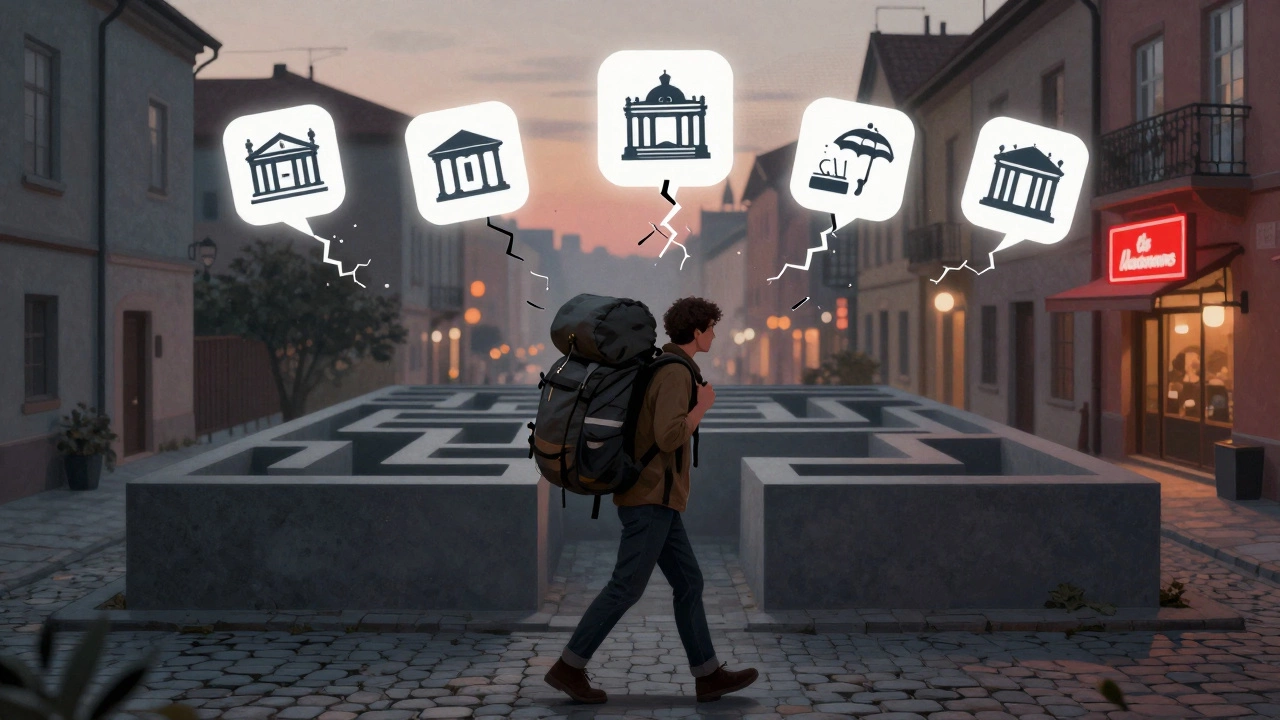
On a beach vacation, your body knows the rhythm. Wake up, eat, lounge, nap, eat again, watch the sunset. Your brain doesn’t have to make decisions. In a city? Every hour is a choice. Do you go to the Louvre or the Musée d’Orsay? Eat at that Michelin-starred place you read about or grab a sandwich from a street vendor? Take the metro or walk? Each decision burns mental energy.
Research from the University of California shows that people who take short, packed trips report higher stress levels than those who take longer, slower vacations. Why? Because your brain is still in ‘planning mode’-even when you’re supposed to be relaxing. You’re trying to fit five days of experiences into 72 hours. That’s not a break. That’s a performance review for your vacation.
The Hidden Costs of Walking Everywhere
You think walking is free. It is-until your feet scream. City breaks rely on walking because it’s cheap, eco-friendly, and ‘authentic.’ But if you’re not used to it, your body pays the price.
Most European cities have cobblestones. Tokyo has steep hills. New York has sidewalks that feel like concrete slabs. Your feet, knees, and hips weren’t designed for 10 miles a day on uneven surfaces. A 2024 survey by the European Travel Commission found that 68% of travelers who took city breaks reported foot pain or lower back discomfort by day two.
And it’s not just physical. Your brain is constantly scanning for sidewalks, traffic lights, signs, and alleyways. No time to zone out. Your senses are on overdrive. That’s why you feel mentally drained even after a nap. Your body didn’t rest. It just paused.
Overloaded Itineraries Are the Real Culprit
Travel blogs love listing ‘10 Things to Do in Berlin in 48 Hours.’ They make it look easy. But here’s what they don’t tell you: that list assumes you wake up at 7 a.m., skip breakfast, skip lunch, never sit down, and don’t get lost.
Real life isn’t like that. You oversleep. You wait in line for coffee. You get caught in the rain. You find a bookstore and lose 45 minutes. You end up skipping half the things on your list-and feel guilty about it.
That guilt? It’s the hidden cost of a packed schedule. You’re not enjoying the city. You’re checking boxes. And when you check the last box, you feel empty, not fulfilled.
Try this instead: pick one anchor experience per day. One museum. One great meal. One quiet park. Let the rest happen naturally. You’ll remember the croissant you ate while watching pigeons in a quiet square more than the 12 monuments you rushed past.
The Social Pressure of City Breaks
City breaks are social media bait. You’re not just traveling for yourself-you’re traveling for the feed. That means you’re taking photos at golden hour, posing in front of famous landmarks, waiting for the perfect light, editing on your phone during dinner.
That’s not relaxing. That’s work.
And then there’s the pressure to be ‘doing something.’ You’re surrounded by people who look like they’re having the time of their lives. Everyone’s smiling in photos. You’re tired, your shoes are rubbing, and you just want to sit on a bench and stare at nothing. But you don’t say it. You keep moving.
That’s why so many people come back from city breaks saying, ‘I need a vacation after my vacation.’ You didn’t escape your routine-you just moved it to a different city.
When City Breaks Actually Work
Not all city breaks are exhausting. Some leave you energized. What’s the difference?
It’s not the destination. It’s the mindset.
People who love city breaks don’t try to see everything. They try to feel something. They pick one neighborhood and wander. They eat where the locals eat, even if it’s not on a blog. They leave time for bad coffee, rainy afternoons, and getting lost. They don’t take photos of every meal.
Take Vienna. You could do the opera, the palace, the coffee houses, the museums. Or you could sit in a single café for two hours, read a book, watch the old men play chess outside, and buy a single slice of Sachertorte. You’ll remember that more than the entire Hofburg Palace.
Or try Lisbon. Skip the tram ride everyone takes. Walk up the narrow streets of Alfama without a map. Let yourself get turned around. Sit on a bench and listen to a fado singer. That’s the city break that sticks with you.

How to Make Your Next City Break Actually Restful
Here’s how to turn a tiring city trip into a real recharge:
- Limit your sights to three per day. That’s it. Anything more is overload.
- Book a room with a view and a good bed. You’ll sleep more, and recovery starts with rest.
- Leave your camera at the hotel. Or use it only for one photo a day. You’ll notice more.
- Plan one lazy afternoon. No agenda. No list. Just sit. Read. Nap. Stare at clouds.
- Eat one big meal and snack the rest. You don’t need three full dinners. A pastry, a sandwich, and a glass of wine can be a perfect day.
- Take the metro once. Not to get from A to B. Just to see how locals live. Watch them. Listen. Don’t take photos.
That’s it. No apps. No checklists. No ‘must-sees.’ Just presence.
What Happens When You Stop Trying to Do It All
When you stop trying to cram a lifetime of experiences into three days, something strange happens. You start noticing things you never would have seen before.
A kid feeding pigeons in a quiet courtyard.
An old man singing to himself while fixing his bike.
The smell of wet stone after rain.
The way the light hits a church window at 4 p.m.
These aren’t Instagram moments. They’re human moments. And they’re the only things that truly restore you.
City breaks don’t have to be tiring. They just have to stop being a race.
Are city breaks worth it if they make you tired?
Yes-if you stop treating them like a checklist. City breaks are worth it when they give you a moment of real connection-not when you’ve seen every landmark. The best trips leave you feeling quiet inside, not drained. It’s not about what you saw. It’s about what you noticed.
Is it better to do a city break or a beach vacation?
It depends on what you need. If you’re mentally burnt out, a beach gives you silence and rhythm. If you’re bored and craving stimulation, a city gives you energy and surprise. Neither is better. But if you’re already exhausted, a city break might make it worse. Choose based on your energy, not your Instagram feed.
How long should a city break be to avoid burnout?
Three days is the sweet spot for most people. Two days feels rushed. Four days starts to feel like a real trip-and you’ll need to plan for downtime. Stick to three. That’s long enough to get a taste, short enough to avoid overload.
Do I need to book everything in advance?
No. Book your hotel and one or two must-do tickets (like a museum or show). Leave the rest open. The best moments in cities happen when you’re not following a plan. Walk into a random bakery. Chat with a shopkeeper. Let yourself wander.
Why do I feel more tired after a city break than after work?
Because work is predictable. You know the tasks. You know the people. A city break is unpredictable. You’re constantly making decisions, navigating unfamiliar spaces, and trying to be ‘on’ for photos and social media. That’s not rest. That’s performance. And performance drains you more than any 9-to-5.