
Adventure Travel Fitness Calculator
Assess if you're physically ready for adventure travel after 70 based on your walking ability and health conditions. Most senior adventure trips require the ability to walk 3-6 miles daily on gentle terrain.
Your Adventure Travel Readiness
Tip: Most senior adventure trips include rest days and flexible pacing. Consider joining a group with small size (8-12 people) for better support.
When you think of adventure travel, images of young backpackers scaling mountains or solo travelers hiking remote trails often come to mind. But what about people who are 70 or older? Do they still pack a bag, book a flight, and chase sunrises on a mountain ridge or paddle through wild rivers? The answer isn’t just yes-it’s louder than you think.
More 70-Year-Olds Are Traveling Than Ever Before
In 2025, over 42 million Americans aged 65 and older traveled internationally, according to the U.S. Travel Association. Nearly 1 in 3 of them chose some form of adventure travel: hiking in Patagonia, kayaking in Alaska, cycling through Tuscany, or taking a small-ship cruise through the Galápagos. That’s up from just 18 million in 2010. The numbers don’t lie-senior travelers aren’t slowing down. They’re redefining what adventure means.
Why now? Life expectancy has climbed. In 1980, the average American lived to 73. Today, it’s 78.8, and many 70-year-olds are healthier, stronger, and more financially stable than previous generations. Retirement isn’t the end of the road-it’s the start of a new one.
Adventure Isn’t Just for the Young
Adventure travel for 70-year-olds doesn’t mean climbing Everest. It means doing something that pushes you just a little beyond your comfort zone. It’s walking the Camino de Santiago for 10 days, not racing it. It’s taking a guided nature walk in Costa Rica’s cloud forests with a local expert who knows where to spot sloths. It’s riding a camel through the Sahara at sunset, not racing across dunes.
Companies that specialize in senior adventure travel have noticed this shift. Operators like Expedition Travel a travel company offering small-group adventure tours designed for travelers aged 60+ and Road Scholar a nonprofit offering educational travel experiences focused on cultural immersion and light physical activity now run over 800 trips annually for travelers 70 and older. Their most popular itineraries? Walking tours with low-impact hikes, historical city explorations with private guides, and wildlife safaris with rest stops built in.
What Do 70-Year-Olds Actually Do on Adventure Trips?
Let’s get specific. Here’s what’s trending among travelers over 70 in 2026:
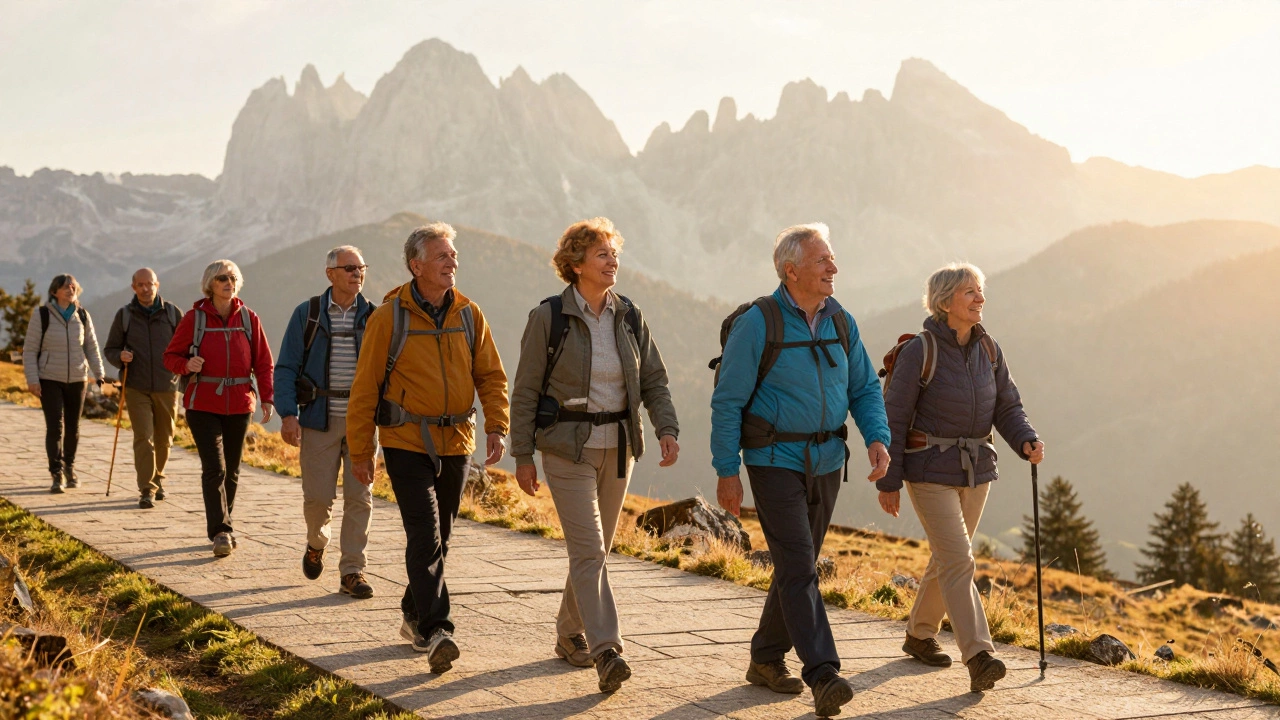
- Walking tours in Europe - Italy, Spain, and Portugal top the list. Groups walk 4-6 miles a day, stay in family-run guesthouses, and eat local food. No marathon hiking. Just steady, meaningful movement.
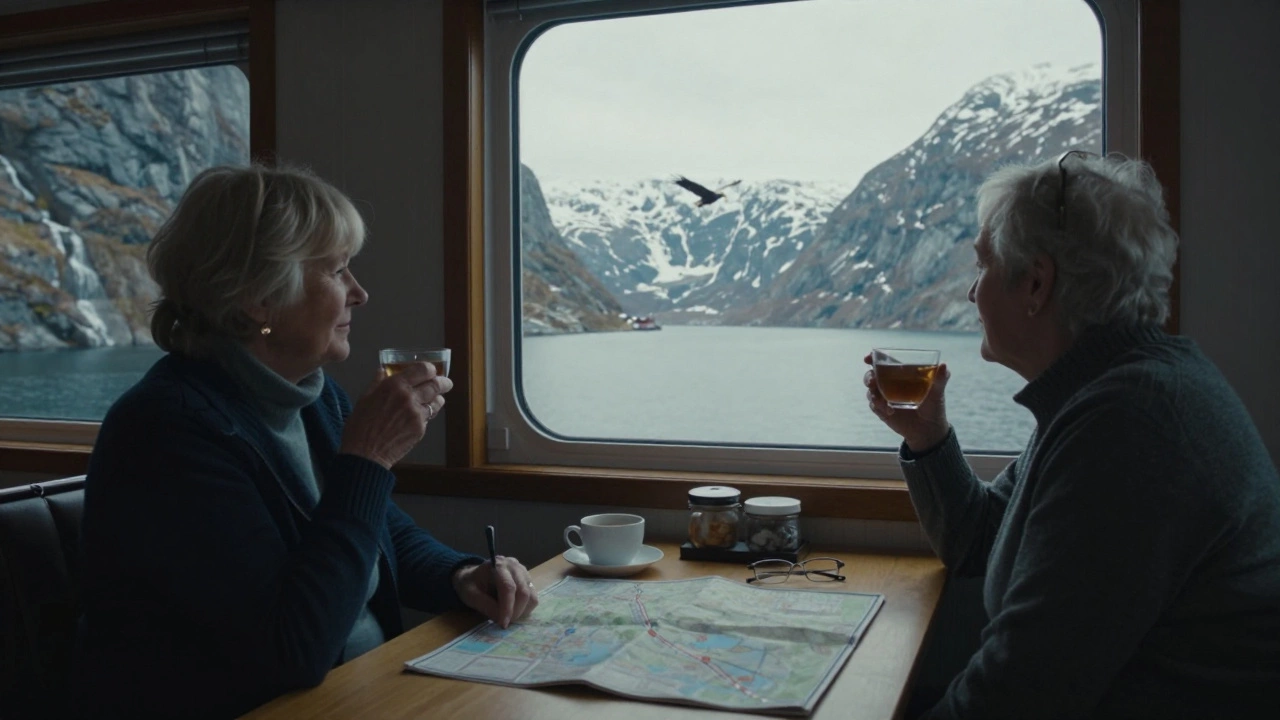
- Small-ship cruises - Ships with 50-100 passengers, not cruise liners with 3,000. These go to places like the Baltic, the Norwegian fjords, and the Galápagos. No crowds. No rush. Just deep immersion.
- Wildlife safaris in Africa - Not the risky, off-road version. Think luxury lodges with private guides, early morning game drives, and afternoon naps. Many travelers say seeing elephants in the wild at 72 was the most emotional moment of their lives.
- Cultural immersion trips - Learning to make pasta in Bologna, brewing tea in Kyoto, or weaving textiles with women in Guatemala. These trips focus on connection, not conquest.
One 74-year-old woman from Minnesota told a travel magazine: "I didn’t travel much before I turned 70. I thought I was too old. Then I went on a 7-day walk in the Dolomites. I didn’t summit any peaks. But I saw the sunrise from a stone bench, ate fresh ravioli with a local family, and cried when I had to leave. I didn’t know I still had that in me."
Barriers? Yes. But They’re Being Broken
Of course, there are challenges. Some 70-year-olds worry about health risks, mobility, or being "too slow" for a group. Others fear being ignored by tour operators who assume they’re too fragile.
But here’s the truth: tour companies are adapting fast. Many now offer:
- Flexible pacing - you can skip a hike and relax at the lodge
- Medical support - on-call nurses on some trips, or partnerships with local clinics
- Accessible transport - vans with lifts, elevators in hotels, no stairs required
- Smaller groups - 8 to 12 people, not 30
- Pre-trip health consultations - to match you with the right level of activity
Insurance is also changing. Companies like Seven Corners a travel insurance provider offering coverage for pre-existing conditions and emergency evacuation for seniors now offer plans that cover conditions like hypertension or mild arthritis, as long as they’re stable. That’s a game-changer.
Why Travel After 70 Matters More Than You Think
It’s not just about seeing new places. Studies from the Mayo Clinic a nonprofit medical center that has published research on travel and cognitive health in older adults show that travel after 70 improves memory, reduces stress, and even lowers the risk of depression. Why? Because novelty stimulates the brain. Walking through a new city, tasting unfamiliar food, meeting strangers from different cultures-it all keeps your mind active.
There’s also a social side. Many 70-year-olds travel with friends or join group trips to avoid loneliness. One 71-year-old man from Chicago said: "I lost my wife last year. I didn’t want to sit home. So I signed up for a trip to Scotland. I met five other widowers. We still text every week."
How to Start Traveling After 70
If you’re 70 or older and thinking about your first adventure trip, here’s how to begin:
- Start small - Try a 4-day trip to a nearby city with good walkability. No need to fly overseas right away.
- Choose the right operator - Look for companies that explicitly say they serve seniors. Ask if they offer flexible pacing and medical support.
- Check your insurance - Make sure your plan covers pre-existing conditions and emergency evacuation. Don’t assume your regular health insurance works abroad.
- Talk to your doctor - Get clearance. Ask what activities are safe for you. Bring a list of medications and dosages.
- Pack smart - Comfortable shoes, a lightweight first-aid kit, and a portable oxygen concentrator if needed. Don’t overpack. You’ll thank yourself later.
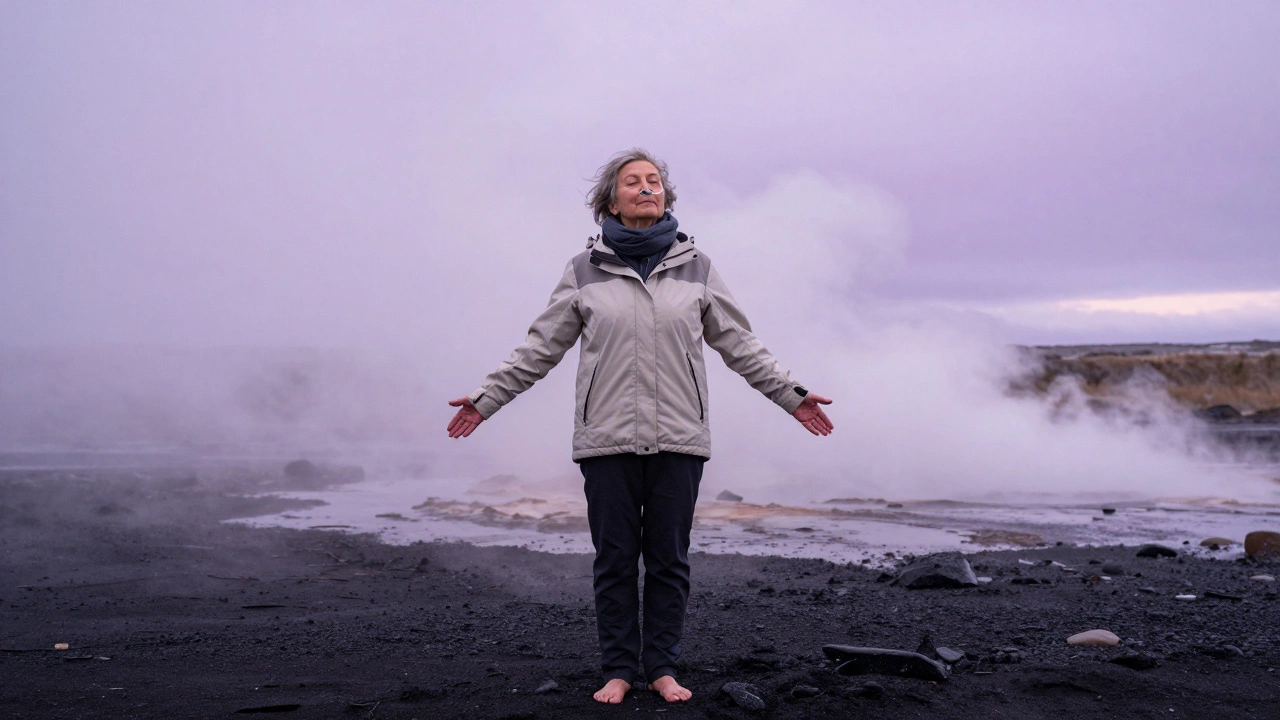
One woman, 73, from Florida, took her first trip to Iceland last year. She had COPD. She used oxygen on the plane. But she walked on black sand beaches, saw geysers, and drank hot chocolate in a cozy café with new friends. "I thought I was too broken to travel," she said. "Turns out, I just needed the right trip."
The Real Secret? You’re Not Too Old. You’re Just Late.
The myth that adventure is for the young is just that-a myth. People don’t stop wanting to explore when they turn 70. They just stop believing they’re allowed to.
The world hasn’t changed. But we have. Today’s 70-year-olds are more active, more curious, and more capable than ever before. And the travel industry is finally catching up.
If you’re 70 or older and wondering whether to take that trip-yes. Book it. Pack your bag. Say yes to the hike, the boat ride, the sunrise view. You’ve earned it. And the world is waiting for you.
Do 70-year-olds really go on adventure trips, or is it just a few outliers?
Yes, it’s not rare-it’s common. Over 42 million Americans aged 65 and older traveled internationally in 2025, and nearly a third of them chose active or adventure-style trips. Companies like Road Scholar and Expedition Travel now run hundreds of trips specifically for travelers over 70, with waiting lists for popular destinations. This is a growing trend, not a fluke.
What kind of physical fitness do you need to travel at 70?
You don’t need to be an athlete. Most senior adventure trips require the ability to walk 3-6 miles a day on even or gently rolling terrain. Many trips include rest days, options to skip hikes, and transportation between sites. The goal isn’t endurance-it’s engagement. If you can manage daily walks around your neighborhood, you’re likely ready for a well-designed senior trip.
Is travel insurance available for people over 70 with pre-existing conditions?
Yes, but you need to look for it. Providers like Seven Corners, Allianz Travel, and InsureMyTrip now offer plans that cover stable pre-existing conditions like diabetes, hypertension, or arthritis-if you purchase the policy within 14-21 days of your initial trip deposit. Always read the fine print and ask for written confirmation.
Are there trips designed just for solo travelers over 70?
Absolutely. Many operators now offer solo traveler discounts and group matching services. Companies like G Adventures and Grand Circle Travel have dedicated solo traveler programs where you won’t pay a single supplement if you’re willing to share a room. Others offer guaranteed single rooms for a small fee. Solo travel after 70 is one of the fastest-growing segments in senior tourism.
What’s the most common mistake older travelers make when planning a trip?
Overpacking and underestimating rest. Many bring too many clothes, heavy shoes, or unnecessary gear. The best advice? Pack light, prioritize comfort, and build in downtime. Also, don’t assume every tour group will slow down for you. Choose operators that advertise flexible pacing and small groups. That’s the key to a stress-free experience.