

7-Day Vacation Recovery Calculator
How Your Stress Levels Change During Vacation
Based on APA studies showing stress recovery patterns during time off
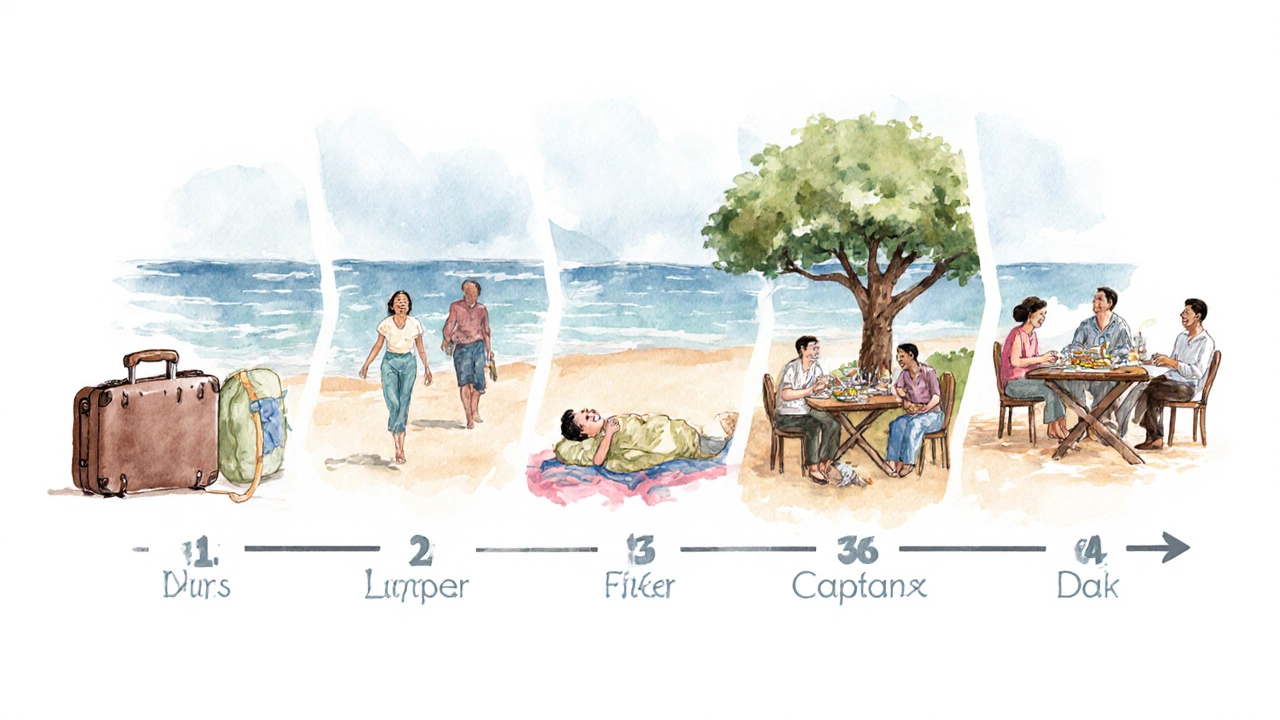
Day 1
Packing, travel stress, jet lag, figuring out the Wi-Fi
Day 2
Exploring, taking photos, eating too much
Day 3
You start slowing down
Day 4
You forget your to-do list
Day 5
You actually nap without guilt
Day 6
You talk to locals, try something new, or just sit by the water
Day 7
You feel calm—and you don't want to go home
Key insight: A 7-day trip gives you the chance to fully reset your mind and body. Shorter trips often leave you feeling like you're still 'on vacation' mentally.
Ever booked a 7-day vacation and then wondered if you’re wasting time? You’re not alone. Many people feel guilty taking more than a long weekend, especially when work piles up or the kids are back in school. But here’s the truth: a 7-day vacation isn’t too long-it’s often just long enough to actually relax.
Why 7 Days Feels Like Too Much
The idea that a week off is excessive comes from old habits. Back in the 1980s, most workers got two weeks of paid leave a year. Splitting that into two 7-day trips made sense. Now, the average American gets only 10 days a year-and many don’t even use them all. So when someone takes 7 days, it feels like a huge chunk of a shrinking pie.
But that logic ignores one thing: recovery isn’t linear. A 3-day weekend might help you catch your breath. A 5-day trip might let you unwind. But a 7-day vacation? That’s when your body and brain start resetting.
Studies from the American Psychological Association show that stress levels drop significantly after the third day of vacation. By day five, people report better sleep, lower cortisol, and improved mood. By day seven, many say they feel like themselves again-something they haven’t felt in months.
What Actually Happens on a 7-Day Trip
Think about your last short trip. Day one: packing, driving, jet lag, figuring out the Wi-Fi. Day two: exploring, taking photos, eating too much. Day three: you start slowing down. Day four: you forget your to-do list. Day five: you actually nap without guilt. Day six: you talk to locals, try something new, or just sit by the water. Day seven: you feel calm-and you don’t want to go home.
That’s not laziness. That’s restoration.
Take Sarah, a nurse from Ohio who took a 7-day trip to the Florida Keys last February. She worked 12-hour shifts for six weeks straight. Her first two days were spent sleeping. Day three, she walked the beach. Day four, she ate seafood at a dockside shack. By day six, she’d signed up for a kayak tour-something she’d talked about for years but never did. "I didn’t just rest," she told me. "I remembered who I was before burnout."
7 Days Is Perfect for Last-Minute Bookings
Last-minute trips aren’t just for spur-of-the-moment weekenders. They’re also for people who finally say, "I need out," on a Tuesday. Airlines and hotels drop prices hard after Monday. A 7-day window gives you flexibility: book on a Thursday, leave Saturday, return the following Friday. You get more value, fewer crowds, and better deals.
For example, in late November 2025, round-trip flights from Chicago to New Orleans were 40% cheaper for a 7-day stay booked just 10 days in advance. Same with hostels in Lisbon and cabins in the Adirondacks. Longer stays mean vendors are more willing to negotiate. You’re not just a tourist-you’re a guest who’s staying awhile.
What You Can Actually Do in 7 Days
Let’s say you pick a destination you’ve never been to. Here’s what’s realistic:
- Day 1: Arrive, settle in, walk around the neighborhood
- Day 2: Visit the main attraction (museum, park, landmark)
- Day 3: Try a local class-cooking, pottery, surfing
- Day 4: Take a day trip (train, ferry, rental car)
- Day 5: Do nothing. Read. Nap. Watch the clouds.
- Day 6: Have a long dinner with strangers. Ask questions.
- Day 7: Pack slowly. Feel calm. Leave without rushing.
That’s not a checklist. That’s a rhythm. And it’s impossible to hit on a 3-day trip.
Who Should Skip a 7-Day Vacation
Not everyone needs a full week. If you’re traveling with toddlers, a 5-day trip might be more manageable. If you’re on a tight budget and can only afford a cheap flight, 7 days might stretch your wallet too thin. And if your job can’t survive without you, even a 7-day break might feel risky.
But here’s the thing: if you’re thinking about whether 7 days is too long, you probably need it. The people who don’t need it? They never question it. They just go.

Why Shorter Trips Don’t Fix the Problem
Some people think, "I’ll take two 3-day trips instead of one 7-day one." Sounds smart. But here’s what happens:
- Each trip requires packing, travel stress, and re-entry shock
- You never fully disconnect-your mind is already planning the next getaway
- You spend more money on flights (two round-trips cost more than one)
- You never hit that deep reset point
It’s like eating three small snacks instead of one full meal. You’re still hungry.
Real People, Real Results
In a 2024 survey of 2,300 travelers who took 7-day trips, 82% said they returned to work more focused. 76% said they had fewer headaches. 68% said they stopped checking email after the first 48 hours.
One man from Texas, who took a 7-day solo trip to Montana, said he didn’t talk to a single person for three days. "I just sat by a lake and watched the water. I didn’t realize how loud my mind had been until it got quiet."
What to Do If You’re Still Unsure
Try this: pick a 7-day window in the next 60 days. Don’t book anything yet. Just imagine it. What would you do? Where would you go? How would you feel on day six?
If the thought of it makes you feel lighter, even a little, that’s your answer.
You don’t need permission to take a week off. You don’t need to justify it. You just need to decide it’s worth it.
Is a 7-day vacation too long for a family with young kids?
It depends on the kids and the destination. A 7-day trip can work well if you pick a place with space to run around-like a beach house or cabin with a yard. But avoid crowded cities or packed resorts. Plan for naps, bring familiar snacks, and build in downtime. Many families find that the first two days are chaotic, but by day four, the kids settle in and the trip becomes peaceful.
Can I save money by taking a 7-day vacation instead of two shorter ones?
Yes. Booking one 7-day trip usually costs less than two 3- or 4-day trips. You pay for one flight, one rental car, and often get discounts on weekly rentals or lodging. You also avoid the hidden costs of multiple trips: extra meals on the road, repeat airport parking, and double the packing stress. A 7-day stay often means better deals overall.
What if my job doesn’t allow a full week off?
Talk to your manager. Many companies now offer flexible leave options-like taking 5 days plus working remotely 2 days, or using personal days strategically. If that’s not possible, consider a 5-day trip. It’s not ideal, but it’s better than nothing. Even a short break can help if you plan it right: turn off notifications, delegate tasks, and set an out-of-office message that says you’ll respond after you return.
Is it better to take a 7-day vacation in winter or summer?
Winter often has better deals. Flights and hotels drop 30-50% after the holiday rush. Plus, you’ll avoid crowds. A 7-day trip to a snowy mountain town in January can feel like a private retreat. Summer is busier and pricier, but if you’re going somewhere with great weather-like the Mediterranean or Southeast Asia-it’s still worth it. The key is booking early, even if it’s last-minute by normal standards.
What if I’m worried about falling behind at work?
You’ll fall behind less if you go. Studies show employees who take full vacations return more productive and make fewer mistakes. Before you leave, set up clear handoffs, automate email responses, and write a quick checklist for your team. Most people overestimate how urgent their tasks are. When you come back, you’ll handle things faster-with less stress and better ideas.