Trip Anxiety Assessment & Coping Guide
Answer these questions to identify your primary trip anxiety triggers:
Your Primary Trigger:
Recommended Coping Strategy:
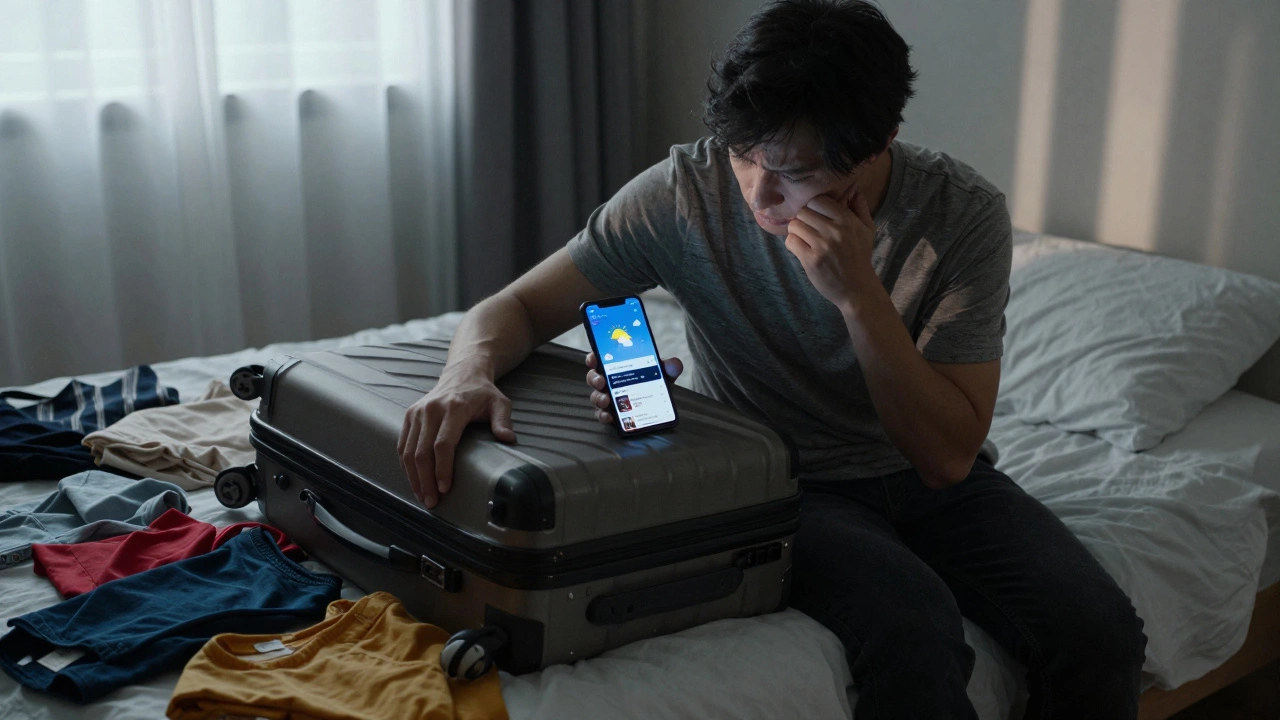
You’ve booked the cabin, packed your bag, and set the GPS. But instead of excitement, your stomach knots up. Your heart races. You keep checking the weather forecast, wondering if you forgot something. You’re not broken-you’re just experiencing trip anxiety.
It’s Not Just Nerves-It’s a Real Reaction
Trip anxiety isn’t about being overly cautious. It’s your body’s alarm system kicking in, even when there’s no real danger. Think of it like stage fright, but for travel. A 2024 study from the University of Cape Town found that 41% of people who took weekend trips reported physical symptoms like nausea, insomnia, or racing thoughts in the 48 hours before leaving. This isn’t rare. It’s common. And it’s not your fault.
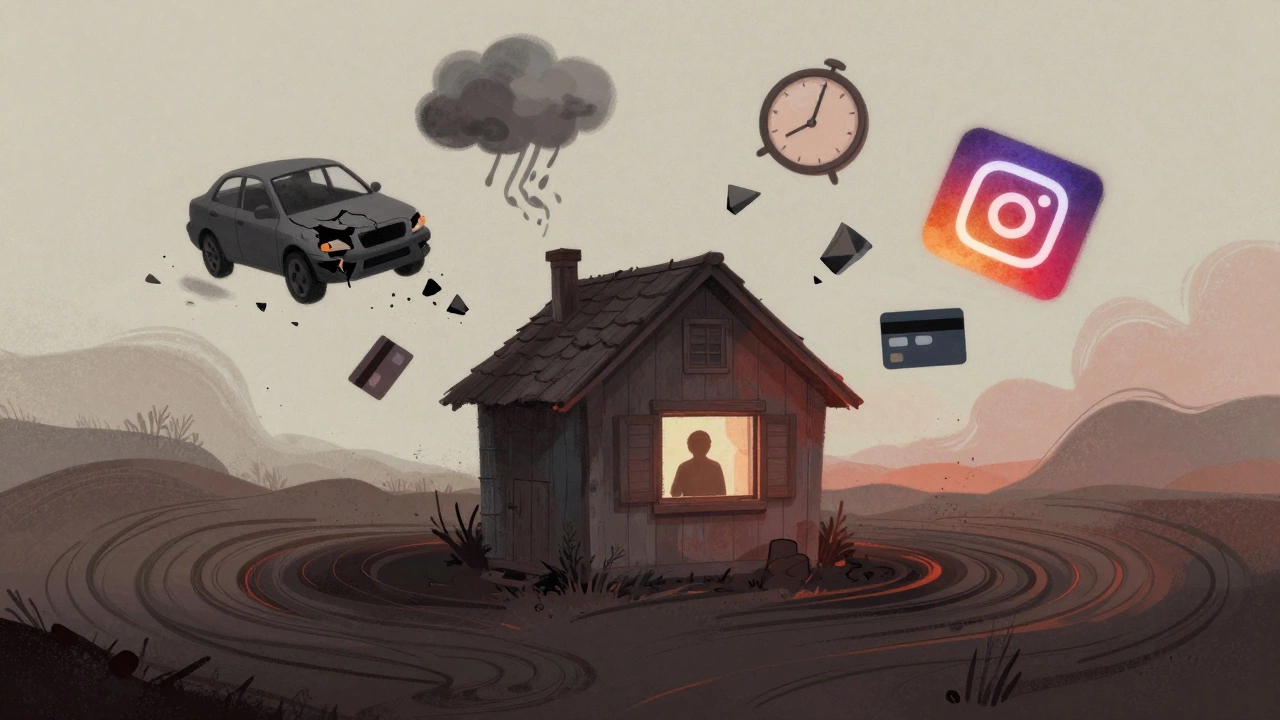
Your brain doesn’t distinguish between a tiger on the savanna and a missed flight. Both trigger the same fight-or-flight response. When you’re planning a getaway, your mind starts listing every possible thing that could go wrong: What if the car breaks down? What if the reservation is lost? What if I hate the place? These aren’t rational fears-they’re mental loops your brain gets stuck in.
Why Weekend Getaways Make It Worse
Weekend trips are the worst for triggering anxiety. Why? Because they’re short, high-stakes, and packed with pressure.
- You’ve got only 48 hours to relax, so every minute feels critical.
- You’ve spent weeks dreaming about it-so if something goes wrong, it feels like a personal failure.
- You’re trying to escape work stress, but the trip itself becomes another task on your to-do list.
People often think weekends are for unwinding. But if you’re already worn out, your brain doesn’t know how to switch gears. Instead of relaxing, you’re hyper-focusing on logistics. You start checking hotel reviews for the 17th time. You re-read the driving directions. You panic because your phone battery is at 30% and you’re not sure if the cabin has Wi-Fi.
The Hidden Triggers You Might Not Notice
Most people blame the trip itself. But the real triggers are often deeper.
- Perfectionism: You’ve seen Instagram posts of flawless mountain cabins and serene beaches. You feel like your trip has to match that. It doesn’t. Reality never looks like a filter.
- Loss of control: You can’t control the weather, traffic, or what other people do. That uncertainty feels dangerous to your brain.
- Financial guilt: You spent money on this trip, and now you’re terrified you won’t get your money’s worth. You start counting every coffee, every kilometer driven.
- Social pressure: Are you going alone? With a partner? With friends? If you’re worried about how you’ll be perceived, your anxiety spikes. You replay conversations in your head: ‘Did I sound too eager? Too quiet?’
One woman from Port Elizabeth told me she canceled three weekend trips last year because she kept imagining her partner getting bored. She didn’t say it out loud-she just felt it. That’s the silent kind of trip anxiety: the kind you don’t even name until it’s too late.
What Your Body Is Telling You
Anxiety doesn’t just live in your head. It shows up in your body.
- Insomnia the night before leaving
- Stomach cramps or nausea
- Constantly checking your phone for updates
- Overpacking because ‘just in case’
- Avoiding talking about the trip with others
These aren’t signs you’re ‘too sensitive.’ They’re signs your nervous system is overloaded. Your body is preparing for a threat-even if the threat is just ‘what if I don’t enjoy this?’
How to Break the Cycle Before You Even Leave
You don’t need to cancel your trip. You need to change how you prepare.
- Write down your fears. Take five minutes and list every ‘what if’ on paper. Then ask yourself: ‘How likely is this?’ Most of them are under 5% chance. Writing them down takes their power away.
- Set one ‘non-negotiable’. Pick one thing that will make your trip feel like a success-whether it’s a quiet morning with coffee, a walk in the woods, or just sleeping in. Focus on that. Let everything else be bonus.
- Limit prep time. Give yourself two hours to pack and plan. After that, stop. You’ve done enough.
- Use grounding techniques. When you feel your heart racing, press your feet into the floor. Name five things you can see, four you can touch, three you can hear. It brings you back to the present.
- Text someone before you leave. Send a simple message: ‘Feeling a bit anxious about the trip tomorrow. Just needed to say it.’ You’ll be surprised how much relief that brings.

What to Do If Anxiety Hits While You’re Away
Even if you prep well, anxiety can still show up. Maybe you’re stuck in traffic. Maybe the cabin smells weird. Maybe your partner is quiet and you think they’re upset.
Here’s what to do:
- Pause. Don’t react. Breathe for 10 seconds. Say to yourself: ‘This feeling will pass.’
- Change your location. Walk outside. Sit in the car with the windows down. A new view resets your nervous system.
- Ask for help. Say: ‘I’m feeling a bit off. Can we just sit quietly for a bit?’ Most people will understand. They’ve felt it too.
- Let go of the plan. The itinerary is a suggestion, not a contract. If you end up watching a movie in bed instead of hiking, that’s still a win.
You’re Not Alone-And This Can Get Better
Trip anxiety doesn’t mean you’re not cut out for travel. It means you care. You want to enjoy this. You want it to matter. That’s not weakness. That’s humanity.
People who feel this way often stop going on trips. They tell themselves they’re ‘not the travel type.’ But the truth is, they’re just the type who feel deeply. And that’s a gift-not a flaw.
Start small. One night away. One quiet morning. One day where you let go of the checklist. You don’t need a perfect trip. You just need a real one.
The cabin might be colder than you expected. The drive might take longer. The coffee might be weak. And that’s okay. Those are the moments that become memories-not the Instagram-perfect ones.
Is trip anxiety the same as travel phobia?
No. Trip anxiety is a temporary stress response before or during a short getaway. Travel phobia (or hodophobia) is a clinical fear of traveling that can prevent someone from leaving home at all. If you avoid trips entirely, feel panic attacks at the thought of driving, or have physical symptoms like vomiting or fainting, you may need professional support. But if you just feel nervous before a weekend trip-you’re in the normal range.
Can medication help with trip anxiety?
For most people, no. Over-the-counter remedies like valerian or melatonin might help with sleep, but they don’t fix the root cause. Anti-anxiety meds are only recommended for severe, persistent cases under a doctor’s care. The best tools are behavioral: breathing, grounding, and changing how you think about the trip. You don’t need a pill-you need a new mindset.
Why do I feel worse after the trip?
That’s called post-trip letdown. It happens when your brain was so focused on the anticipation that once the trip ends, there’s nothing left to look forward to. You might feel empty, tired, or even depressed. To avoid this, plan one small thing after your trip-like a favorite meal, a walk in the park, or calling a friend. Give your brain a new anchor.
Does planning everything in advance help reduce anxiety?
It helps a little-but only if you don’t overdo it. Planning gives you control, which feels safe. But if you’re mapping out every hour, booking every activity, and checking every review, you’re creating more pressure. Aim for structure, not rigidity. Leave space for surprise. Some of the best moments happen when you don’t plan them.
Should I cancel my trip if I’m feeling anxious?
Almost always, no. Anxiety lies. It tells you that if you don’t feel 100% ready, you shouldn’t go. But you’ll never feel 100% ready. The goal isn’t to eliminate anxiety-it’s to move forward with it. Every time you go despite the fear, you prove to your brain that you’re safe. That’s how the fear shrinks.
Next Steps: Try This Tomorrow
Don’t wait for the perfect trip. Start with one small step.
- Tomorrow morning, write down your top three fears about your upcoming getaway.
- Next to each one, write: ‘This is unlikely’ or ‘Even if it happens, I can handle it.’
- Set a timer for 15 minutes to pack. When it rings, close your suitcase.
- Before you leave, take three deep breaths and say: ‘I don’t need this to be perfect. I just need it to be mine.’
You’ve already done the hardest part-you recognized the feeling. Now you know it’s not a warning. It’s just your heart trying to protect you. And you’re strong enough to carry it with you.