Beach Comparison Tool
What matters most to you?
Select your priorities to see which beaches best match your needs
Results
Beaches that match your criteria
Select criteria above to see recommendations
When people ask what city has the nicest beaches in the USA, they’re not just looking for sand and water. They want a place where the tide rolls in just right, the sun doesn’t burn your skin by noon, and you can walk barefoot for miles without stepping on broken glass or trash. It’s not about how many Instagram likes a beach gets-it’s about how it feels when you’re actually there.
Waikiki Beach, Honolulu, Hawaii
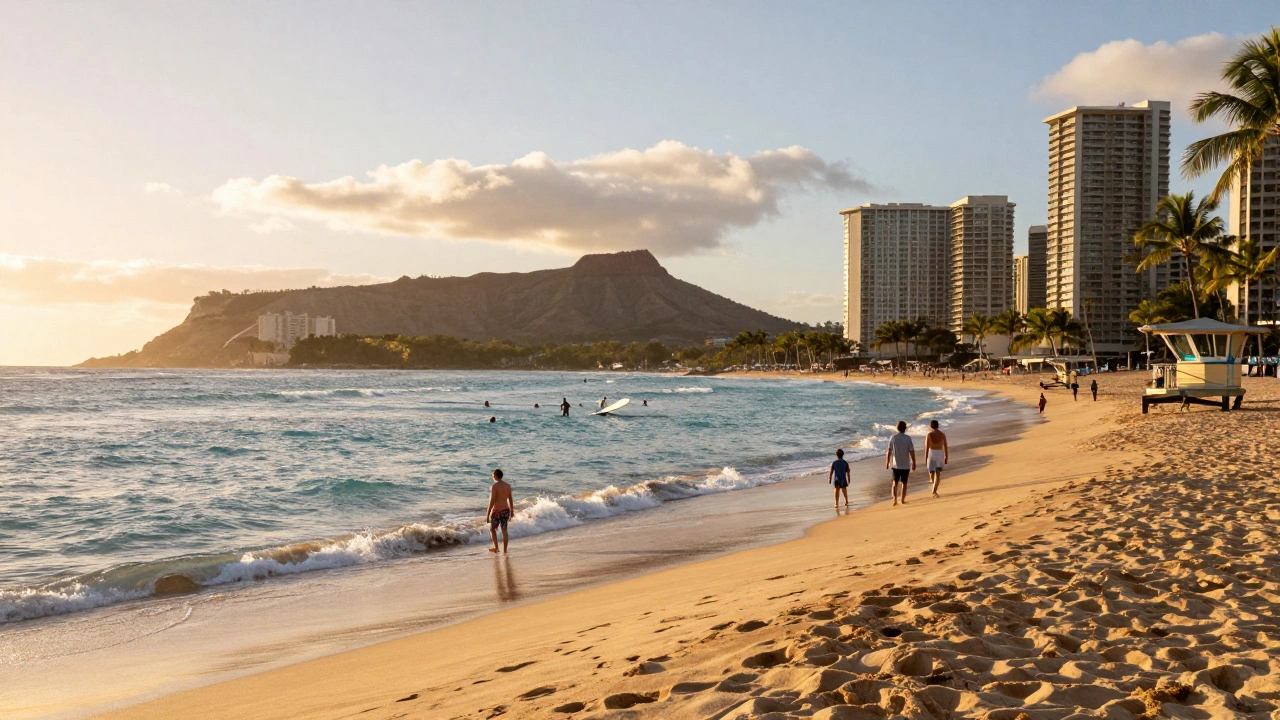
Waikiki isn’t the most secluded beach in the country, but it’s the most consistent. The water is warm year-round, averaging 78°F in winter and 82°F in summer. The sand? Fine, golden, and soft enough to sink into without feeling gritty. Unlike some East Coast beaches where the tide pulls back a mile at low tide, Waikiki’s shoreline stays usable even at low tide, with gentle waves perfect for beginners learning to surf.
What makes Waikiki stand out isn’t just the beach itself-it’s the infrastructure. Lifeguards on every block, public showers, free parking nearby, and snack stands that actually sell fresh fruit, not just overpriced soda. The view of Diamond Head looming behind the shore isn’t just postcard material-it’s real, every morning, every evening. Locals still surf here at dawn, and tourists still line up for shave ice at the end of the day. It’s not perfect, but it’s reliable.
Clearwater Beach, Florida
If you want white sand that looks like powdered sugar and water so clear you can see your toes from the dock, Clearwater Beach delivers. The sand here is 99% pure quartz, which means it stays cool even when the air hits 90°F. It doesn’t get hot underfoot like some Gulf Coast beaches that absorb heat like black asphalt.
Clearwater’s beachfront boardwalk has something for everyone: paddleboard rentals, dolphin-watching tours that actually show you dolphins (not just blurry blurs in the distance), and food trucks serving stone crab claws and key lime pie. The beach is wide enough that even on peak summer weekends, you can find a quiet spot if you walk 100 yards from the main entrance.
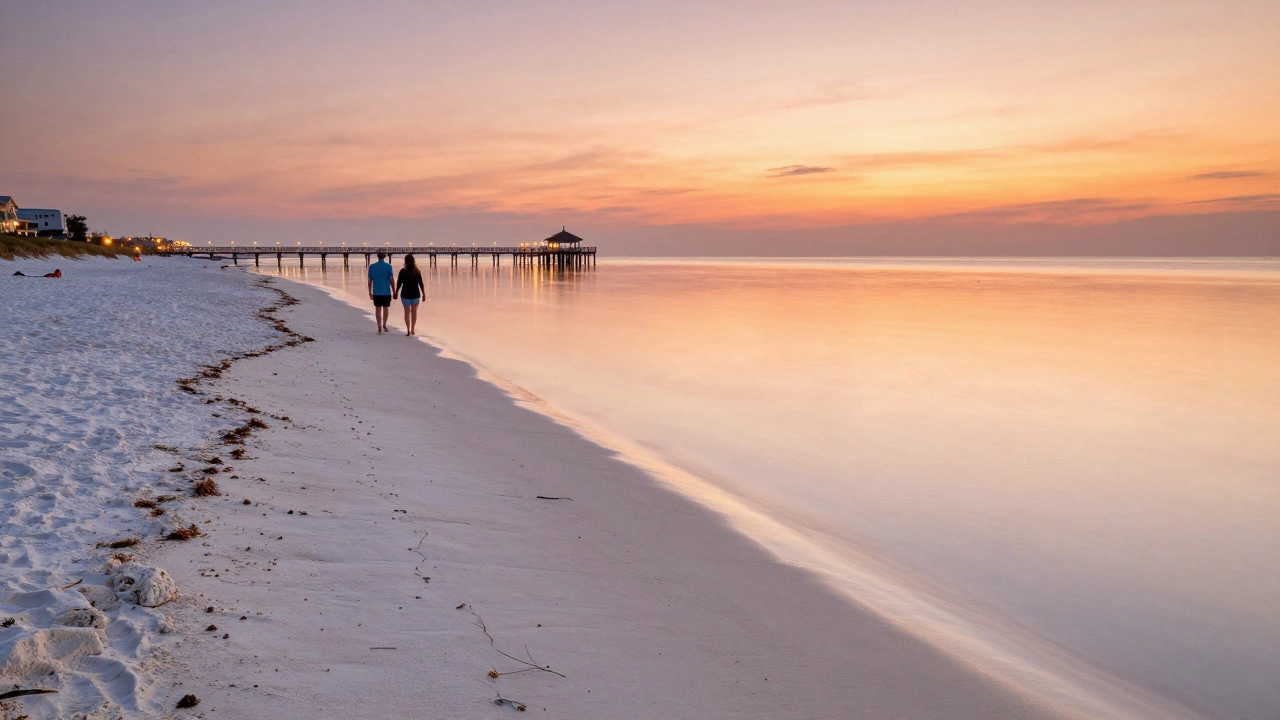
And then there’s the sunset. Every evening, the sky turns orange, then pink, then deep purple over the Gulf. Locals gather on the pier with coolers and guitars. Tourists stop walking to take photos. It’s not staged. It just happens. And it’s better than any fireworks show.
Santa Monica Beach, California
Santa Monica isn’t the quietest beach in California, but it’s the most complete. The beach runs for three miles along the Pacific, with a paved bike path that connects to Venice Beach, Malibu, and beyond. The sand is coarse but clean, and the water is chilly-typical for Southern California, averaging 60°F in winter and 68°F in summer. You’ll need a wetsuit if you plan to swim for more than five minutes.
What sets Santa Monica apart is the mix. You’ll find families with kites, bodyboarders catching small waves, yoga classes on the sand, and street performers playing jazz under the pier. The Santa Monica Pier is iconic-not because it’s old, but because it still works. The Ferris wheel spins, the arcade hums, and the fishing pier is packed with people catching halibut and mackerel.
It’s not a hidden gem. But it’s not a theme park either. It’s a living piece of California culture, where the beach is part of daily life, not just a weekend escape.
Myrtle Beach, South Carolina
Myrtle Beach gets a bad rap. People call it crowded, commercial, and loud. And sure, during summer break, it’s packed. But here’s what most visitors miss: the beach itself is wide, flat, and gently sloping. The water is warmer than most Atlantic beaches-often hitting 80°F in August. The sand is fine, light brown, and holds footprints well, making it perfect for long walks at sunrise.
There’s no shortage of amenities: free public restrooms, outdoor showers, and umbrella rentals for $10 a day. The boardwalk has mini-golf, arcades, and seafood shacks that serve fried shrimp baskets for under $12. You can rent a bike and ride the entire length of the beachfront without hitting a single stoplight.
And if you want quiet? Head north to the quieter stretches near North Myrtle Beach. The crowds thin out, the water stays warm, and the sunsets are just as good.
Assateague Island, Maryland/Virginia
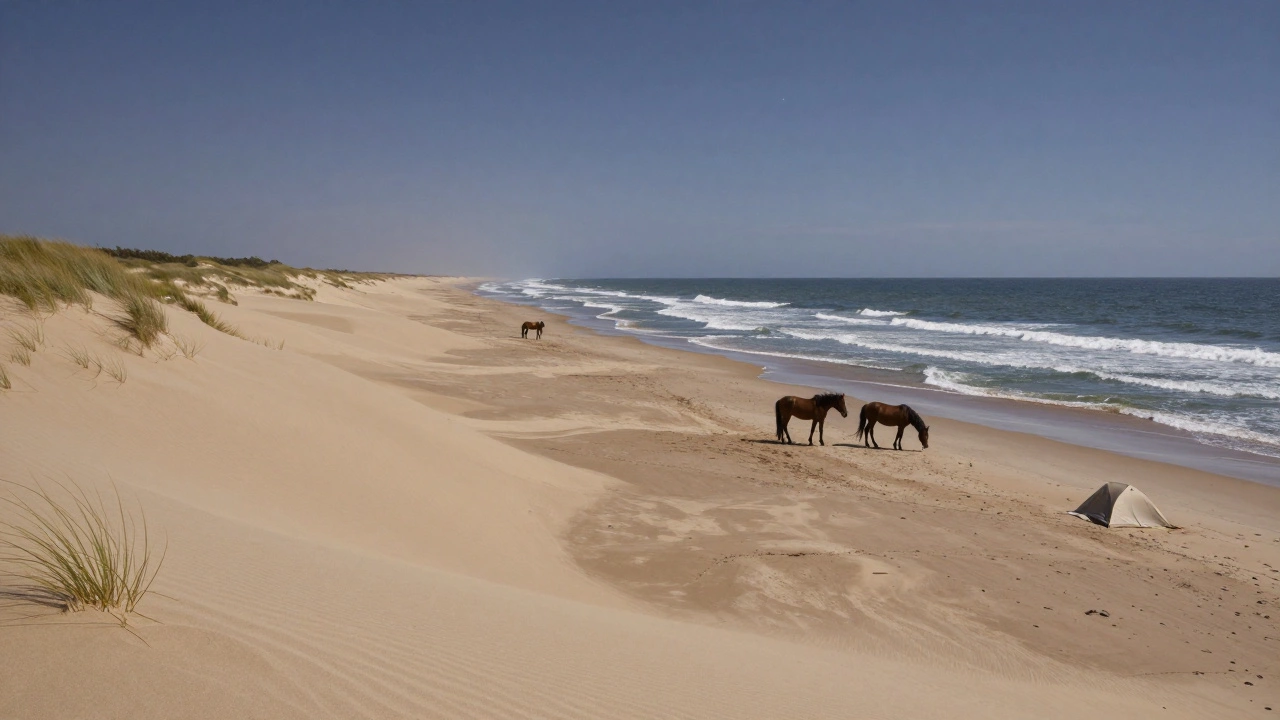
If you’re looking for wild, untouched beaches, Assateague Island is your answer. This barrier island is split between Maryland and Virginia, and it’s home to wild horses that wander the dunes like they own the place. There are no high-rises, no boardwalks, no ice cream stands. Just sand, saltwater, and the sound of wind.
The beach here is narrow in places, wide in others, and always shifting. Tides move the shoreline daily. You might walk a mile and find no one else. The water is cold-around 70°F in peak summer-but the air is clean. You can camp right on the beach, wake up to the sound of gulls, and watch the sunrise over the Atlantic without a single power line in sight.
It’s not for everyone. No bathrooms. No concessions. No lifeguards. But if you want to feel like you’ve stepped back 50 years, this is the place.
Why These Cities Stand Out
What makes these five places better than others isn’t just the sand or the water. It’s the combination of natural beauty and thoughtful design. The best beaches in the USA don’t just exist-they’re maintained. They’re cared for. They have public access, clean facilities, and safety measures that make them usable for everyone, not just the wealthy or the adventurous.
Compare that to beaches that are overcrowded, littered, or privately owned. Some coastal towns have turned their shores into gated resorts. Others let erosion go unchecked. A few have banned dogs, bikes, or even umbrellas to keep things "tidy." But the places that truly work? They let people be people. You can bring your dog. You can play music. You can nap under a towel. You can eat a hot dog on the sand.
The nicest beaches aren’t the most expensive. They’re the most welcoming.
What to Avoid
Not all beaches labeled "beautiful" are worth the trip. Places like Daytona Beach, Florida, have been damaged by decades of off-road vehicle traffic. The sand is compacted, the dunes are gone, and the water quality often dips below safe levels after storms.
Some beaches in Southern California, like Huntington Beach, have heavy pollution from runoff after rain. Check local water quality reports before swimming-many cities post them online. In New Jersey, some beaches charge $25 a day just to park, and the sand is often mixed with crushed shell that cuts your feet.
And avoid beaches that are only accessible by private roads or require membership. If you can’t just show up and walk onto the sand, it’s not really a public beach. It’s a privilege.
Best Time to Visit
Timing matters. Summer is crowded everywhere. For the best balance of good weather and fewer people, aim for late spring (May-June) or early fall (September-October).
In Hawaii, the ocean is calmest in summer, but the trade winds pick up in winter. Spring is ideal. In Florida, May and October avoid the worst of the humidity and hurricane season. California’s water warms up by August, but the fog burns off by late July. South Carolina’s beaches are hottest in July, but September brings fewer crowds and still-warm water.
And always check the tide charts. Low tide can turn a beautiful beach into a muddy mess. High tide can wash away your towel. Know when the water will be at its best.
Final Thought
There’s no single "best" beach in the USA. But there are places where the beach feels like part of the soul of the city. Where you don’t just visit-you remember. Where you come back, not because it’s famous, but because it still feels like home.
What city has the cleanest beaches in the USA?
Clearwater Beach in Florida consistently ranks among the cleanest due to strict local regulations, daily sand sifting, and public access to showers and restrooms. Assateague Island also remains clean because it’s protected as a national seashore with no development allowed on the beach itself.
Are there free public beaches in the USA?
Yes, most major beach cities like Santa Monica, Myrtle Beach, and Waikiki have free public access to the shoreline. Parking may cost money, but walking onto the sand is always free. Some states, like Florida and California, legally guarantee public beach access under state law.
Which US beach has the warmest water?
Myrtle Beach and Clearwater Beach typically have the warmest water along the U.S. Atlantic and Gulf coasts, reaching 80-84°F in late summer. Hawaii’s Waikiki is close behind, with water temperatures averaging 78-82°F year-round.
Is it safe to swim at these beaches?
Yes, all five beaches listed have lifeguards on duty during peak hours and regular water quality testing. Always check local signs for rip current warnings. In California, cold water and strong surf require caution-even strong swimmers can get caught in undertows.
What’s the best beach for families with young kids?
Clearwater Beach and Myrtle Beach are ideal. The water is shallow for hundreds of feet, the sand is soft, and there are plenty of nearby amenities like restrooms, snack stands, and shaded areas. Waikiki also works well, but the waves can be stronger for very young children.