

Peak Travel Time Checker
Check Your Travel Month
If you’ve ever booked a flight last minute for Christmas or summer break and felt like you got robbed, you’re not alone. Airfare doesn’t just go up a little during busy times-it skyrockets. Some months cost double what they do in the off-season. Knowing which months to avoid can save you hundreds, sometimes over a thousand dollars per ticket. This isn’t about luck. It’s about timing.
December is the most expensive month to fly, hands down
December, especially the two weeks before Christmas and the week after New Year’s, is the most expensive time to fly in almost every country. Airlines know families are locked in. They need to get to Grandma’s house. Schools are out. No one’s working. So prices spike. In 2025, round-trip flights from Port Elizabeth to Johannesburg during the week of December 20 cost an average of R8,900. In January, the same route dropped to R4,200. That’s more than a 50% difference.
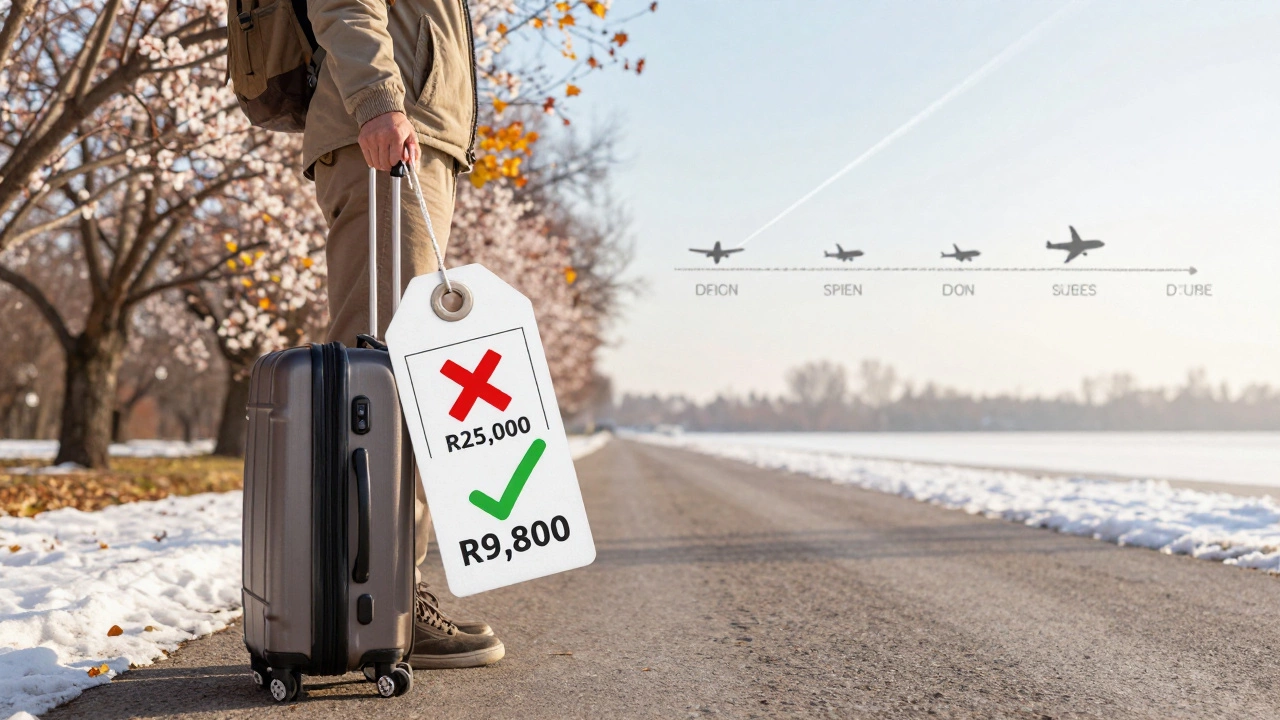
International routes are even worse. Flights from South Africa to Europe or the U.S. during this window regularly hit R25,000 or more. Booking in early November still leaves you paying premium rates. The only way to beat it? Fly out in early December or wait until after January 7. You’ll find deals that feel like a gift themselves.
July and August are the summer rush
If you’re planning a trip to Europe, North America, or even within southern Africa, July and August are the worst months to book. Why? Northern hemisphere schools are on break. Parents scramble to get kids out of the house. Families pile into planes. Demand goes through the roof.
In 2025, flights from Cape Town to London during the first week of August averaged R18,500. The same flight in May? R9,800. Even within South Africa, routes like Johannesburg to Durban saw prices jump 60% during school holidays. Airlines don’t just raise prices-they reduce discount fares entirely. You won’t find R3,500 tickets in July. They’re gone by May.
February and October are the quiet months
While everyone’s chasing summer or snow, smart travelers pick February and October. These months are the sweet spot. School’s back in session. Holidays are over. No big events. Airlines need to fill seats, so they drop prices.
Flights from Durban to Cape Town in February 2025 were as low as R1,900 round-trip. That’s less than half the price of December. International routes saw similar drops. Flights to Dubai or Nairobi in October were 40-50% cheaper than in July. Even flights to Europe started dropping in late February. You won’t find beaches packed or hotels sold out. You’ll just find better deals.

Why do prices spike in these months?
It’s not random. Airlines use algorithms that track booking patterns, school calendars, and public holidays. They know exactly when demand will spike. In December, it’s Christmas, New Year, and summer holidays in the northern hemisphere. In July and August, it’s summer vacation in the U.S., Canada, and Europe. In South Africa, the June-July school holidays also push domestic prices up.
Supply doesn’t increase to match demand. Airlines don’t add more planes. They just raise prices. And because people are committed-Grandma’s birthday, graduation, wedding-they pay. Airlines count on that. That’s why last-minute bookings in these months are a trap. Even if you find a “sale,” it’s still expensive compared to the rest of the year.
What about holidays like Easter or Thanksgiving?
Easter is a big one, especially if you’re flying internationally. In 2025, Easter fell in April. Flights from Johannesburg to London during Easter week cost R16,200. The week before? R8,900. The week after? R7,500. The difference is sharp.
Thanksgiving (in the U.S.) doesn’t affect South African travelers as much, but if you’re flying to the U.S. or connecting through it, late November is another spike. Same with Chinese New Year-flights to Asia get expensive if you’re traveling from anywhere in the world.
Bottom line: any major holiday tied to family travel = higher prices. Avoid flying during the three days before and after the holiday itself.
How to save money when you have to fly in peak season
Let’s be real. Sometimes you can’t avoid December or July. Your kid’s graduation, your parents’ anniversary, your sister’s wedding-it’s not negotiable. So what do you do?
- Book early-at least 3-4 months ahead. Prices start climbing 120 days out. Don’t wait.
- Be flexible with dates-fly on a Tuesday or Wednesday. Avoid weekends. Flying out on a Sunday? You’re paying a holiday premium.
- Use incognito mode-some sites track your searches and raise prices if you keep checking. Clear cookies or use a private window.
- Check nearby airports-if you’re flying to Cape Town, check prices from George or Port Elizabeth. Sometimes the difference is R2,000.
- Use fare alerts-set up Google Flights or Hopper alerts for your route. You’ll get a notification when prices drop.
One traveler from Port Elizabeth saved R5,600 by flying to Johannesburg on December 18 instead of December 21. It was a Wednesday. The flight left at 6 a.m. No one else was traveling that day. She got a seat on a nearly empty plane. And she still made it to the family dinner.
What about budget airlines?
Airlink, FlySafair, and Kulula offer cheaper fares-but they’re still expensive in peak months. In December, a R2,500 flight in May becomes R5,200. They don’t offer discounts. They just charge what the market will bear. So even budget carriers aren’t your escape hatch during holidays.
But here’s the trick: if you book a budget airline flight 6 months in advance, you can lock in a low rate. Some travelers booked their July flights in January and saved over 60%. It’s not magic. It’s math.
When should you book for the best prices?
There’s a pattern. For domestic flights in South Africa, the sweet spot is 4-8 weeks before departure. For international, it’s 3-6 months. But during peak months, that window shrinks. You need to book even earlier.
Here’s a simple rule: if your trip falls in December, July, or around Easter, book by the end of the previous month. That’s it. No waiting. No hoping. Just lock it in.
And if you’re flexible? Travel in February, October, or early January. You’ll get better weather, shorter lines, and more room on the plane. And you’ll have money left over for souvenirs.
What months are the cheapest to fly?
The cheapest months to fly are typically February, October, and early January. These months fall outside major holidays and school breaks. Domestic flights in South Africa can drop to 40-60% lower than peak season prices. International routes also see big savings, especially to Europe and Asia.
Why are flights so expensive in December?
Flights are expensive in December because of high demand. Families travel for Christmas and New Year’s, and schools are on break. Airlines know people have no choice but to fly, so they raise prices. International travel to the U.S. and Europe also spikes because of northern hemisphere holidays. Prices can double compared to November or January.
Is it cheaper to fly on certain days of the week?
Yes. Tuesday and Wednesday are usually the cheapest days to fly, even during peak season. Weekend flights, especially Sunday and Thursday, cost more because of business travelers and families returning home. Flying early in the morning or late at night can also save money.
Do budget airlines offer cheaper fares during peak months?
Budget airlines like FlySafair and Airlink still charge high prices during peak months because demand is high. However, if you book 4-6 months in advance, you can lock in lower rates before prices rise. They don’t run sales during holidays-they just charge what the market will pay.
Should I avoid flying during Easter?
Yes, if you can. Easter week, especially the Friday before and Monday after, is one of the most expensive times to fly. Flights to Europe, the U.S., and even within South Africa spike. Book early or travel the week before or after to save hundreds or thousands.